


Cast Iron vs Stainless Steel BBQ Grates: Which to Choose
Posted by Amy Hall on 28th Nov 2026
Cast Iron vs Stainless Steel BBQ Grates: Which to Choose
Cast iron gives you the harder sear and the bolder grill marks. Stainless steel gives you a grate that asks far less of you once the meal is over. Neither is simply better: the right one depends on what you cook most and how much care you are happy to give the grate afterwards. This guide sets the two side by side, explains how to season and look after cast iron, and shows which type suits which kind of garden cook. If you already know what you need, our outdoor dining range has grills, plancha plates and barbecue accessories to browse.
TL;DR
- Cast iron heats slowly, holds its heat for longer and gives a strong sear and near-non-stick surface once seasoned. It needs oiling and must be kept dry.
- Stainless steel heats and cools faster, resists rust and cleans with soap and water. It is lighter to lift out and store.
- Pick cast iron for steaks, burgers and bold grill marks. Pick stainless for low-effort, everyday cooking and for fish and vegetables.
- Seasoning is a thin coat of cooking oil baked onto clean, dry iron. Repeat it when the surface turns dull or food starts to stick.
- Whatever the material, thickness matters: thin grates warp and lose heat quickly.
Table of Contents
- The short answer: sear or ease
- Cast iron vs stainless steel at a glance
- Heat and searing: why iron leaves the better marks
- Durability and rust
- How to season cast iron BBQ grates
- Cast iron grate care: cleaning and rust prevention
- Caring for stainless steel grates
- Which grate suits you?
- What to check before you buy
- Safety notes for hot grates
- Promo: grates, grills and plates from Great Gardens Online
- Our perspective
- FAQ
- Sources
The short answer: sear or ease
The two materials behave differently on the fire, and that is where the decision starts. Cast iron takes longer to heat up but stays hot for longer and passes heat to food well, which is what gives you consistent cooking and a good sear. Stainless steel warms and cools more quickly, so you are cooking sooner and cleaning up sooner.
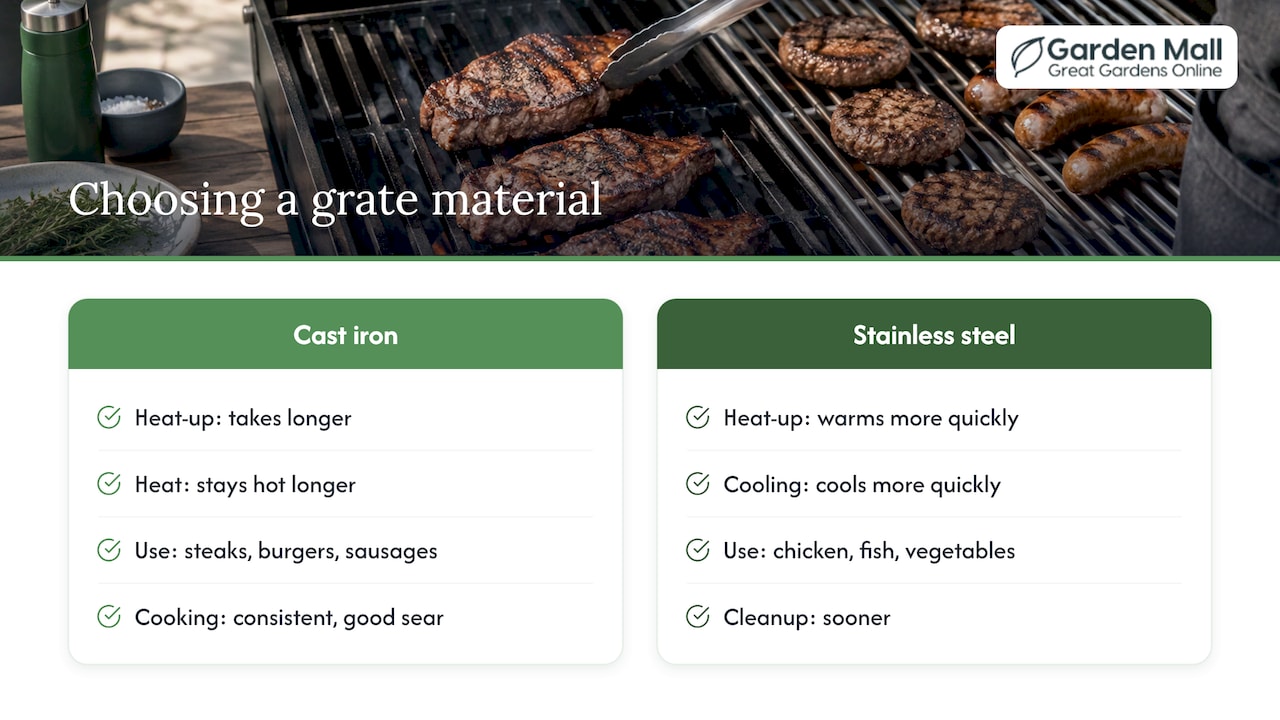
Think about the last three barbecues you hosted. If they were mostly thick steaks, burgers and sausages where a dark crust matters, cast iron suits you. If they were quick weeknight grills of chicken, fish and vegetables, with a pile of washing up already waiting, stainless is the calmer choice.
Cast iron vs stainless steel at a glance
| Cast iron | Stainless steel | |
|---|---|---|
| Heat-up | Slower | Faster |
| Heat retention | Stays hot longer, steady cooking | Cools faster, responds quickly |
| Sear marks | Strong, deep marks | Good, lighter marks |
| Food release | Near-non-stick once well seasoned | Food can grip unless the grate is hot and oiled |
| Rust | Needs seasoning and dry storage | Resists rust |
| Cleaning | Brush while warm, re-oil | Soap and water |
| Weight | Heavy | Lighter, easier to remove and store |
| Lifespan | Very long with care | Often usable for over ten years |
The comparison of heat, handling and lifespan follows the checked findings from a 2026 grill-grate comparison. Your own barbecue, how often you cook and where it lives will shift the balance.
Heat and searing: why iron leaves the better marks
A sear is the dark, flavourful crust that forms when food meets a very hot surface. The grate has to hold plenty of heat so it does not drop in temperature the moment cold meat lands on it. Cast iron is dense, so it stores a lot of heat and keeps delivering it. That is why a thick iron grate leaves those broad, dark bars across a steak.
Stainless steel stores less heat. It recovers well when the fire is strong, but a crowded grate of cold food will cool it faster. Some cooks like this: the gentler, more responsive surface is popular for foods such as fish and vegetables, where you do not want a hard crust.
Practical tip: with either material, preheat the grate fully before you add food. A properly hot grate gives cleaner marks and food that lifts away more easily.
Durability and rust
Stainless steel is the low-fuss option for the weather. It resists rust, so a barbecue that lives outdoors under a cover through a British autumn is easy to look after. Stainless grates are also described as often staying usable for more than ten years.
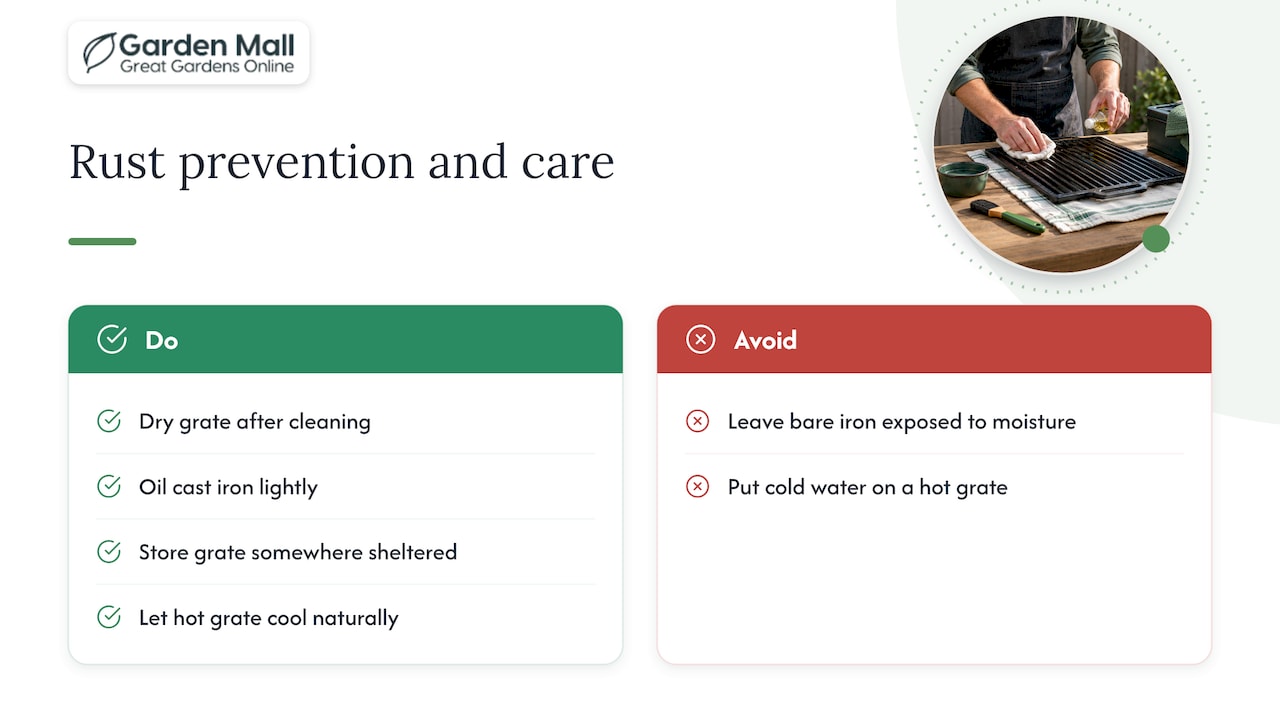
Cast iron is extremely tough and, treated well, lasts for decades. What it asks in return is a protective layer. Bare iron reacts with moisture and air, so the seasoning (a baked-on oil film) is what keeps it smooth and protected. Dry the grate after cleaning, oil it lightly, and store it somewhere sheltered. A fitted cover and a dry shed or garage corner are the simplest ways to stop damp from getting at it.
Cast iron can also crack if it is shocked by sudden temperature change, for example cold water on a very hot grate. Let it cool naturally before it meets water.
How to season cast iron BBQ grates
Seasoning turns a thin layer of oil into a hard, dark, slick coating. It is what makes iron near-non-stick and what keeps rust away. Here is the routine, step by step.
1. Start clean and completely dry
Brush off old food and ash. If the grates are new and carry a factory coating, follow the maker’s instructions for removing it first. Wash in warm water if needed, then dry thoroughly. Any moisture left on the iron will show up as orange spotting.
2. Apply a very thin coat of oil
Use a cooking oil that tolerates high heat, such as vegetable, rapeseed or sunflower oil. Wipe it on with a folded paper towel or cloth, covering every surface including the underside and edges. The key is thin: wipe until the grate looks almost dry. A thick coat turns sticky and patchy instead of hard and glossy.
3. Heat to bake the oil on
Put the grate back in the barbecue, close the lid if you have one, and bring the barbecue up to a hot cooking temperature for around half an hour. The oil will smoke and darken as it bonds to the iron. Switch off and let the grate cool slowly in place.
4. Repeat if needed
Two or three thin coats build a better finish than one heavy one. A new grate benefits most from repeating the process before its first cook.
How often should you season?
There is no fixed calendar. Re-season whenever the surface looks dry, grey or patchy, when food begins to stick, or when you spot the first hint of rust. Many owners give the grate a quick wipe of oil after each wash and a full seasoning at the start of the barbecue season.
Cast iron grate care: cleaning and rust prevention
Good habits make iron easy to live with:
- Clean while the grate is still warm. Scrape and brush off residue once the heat has dropped to a safe level. Burnt-on food comes away far more easily than when it has set cold.
- Go easy on water and soap. A brush and a little hot water is usually enough. If you do wash, dry it straight away.
- Oil after cleaning. A light wipe of oil leaves a thin protective film.
- Store dry. Keep the barbecue covered or the grates indoors over winter.
- Fix rust early. Scrub spots with a brush, wipe clean and dry, then season the area again.
Our barbecue cleaning guide covers scraping hot grates and choosing the right brush, which is worth reading before you buy any tools. If you cook on gas, the steps in our gas BBQ cleaning guide apply to both grate types.
Caring for stainless steel grates
Stainless needs much less. Once the grate is cool enough to handle, wash with warm soapy water and a non-scratch brush, rinse and dry. It does not need oiling for rust protection, though a light wipe of oil on the grate before cooking helps food release cleanly. Stainless steel is also easier to remove, store or transport, which suits anyone who packs a barbecue away for the winter or moves it around a small patio.
Which grate suits you?
Choose cast iron if
- You love steak, burgers and chops with a dark crust and bold grill marks.
- You are happy to season the grate and keep it dry.
- You want steady, even heat once the barbecue is up to temperature.
- You cook on a charcoal or heavy-duty grill where long heat retention helps.
Choose stainless steel if
- You want a grate that resists rust and needs little attention.
- You cook often and quickly, and value fast heat-up and quick cooling.
- You grill a lot of fish, vegetables and delicate food.
- You are a landlord or new homeowner who wants a barbecue that stays presentable with minimal upkeep.
What about porcelain-enamelled cast iron?
Porcelain-enamelled iron is a middle path: iron’s heat holding with an enamel coating that makes cleaning easier. Treat the coating gently with a soft brush, since enamel can chip if scraped hard with metal tools.
What to check before you buy
- Thickness. Thick grates hold heat and stay flat. Thin stainless can warp over time and cook unevenly.
- Fit. Measure your barbecue’s grate area, or check the model’s dimensions, before ordering a replacement.
- Weight. Cast iron is heavy. Make sure you can lift it comfortably to clean and store it.
- Where it lives. An uncovered barbecue in a damp spot favours stainless. A covered or sheltered one gives iron a good home.
- Fuel. Charcoal fans often like iron for its heat. Our charcoal vs gas BBQ comparison will help you decide how the fuel and grate work together.
Safety notes for hot grates
Both materials get very hot, and iron stays hot long after the fire is out. Use long-handled tools and heatproof gloves, keep children and pets well back from the barbecue while it is lit and cooling, and never move a hot grate. Never pour cold water onto a hot cast iron grate: the sudden change can crack it and cause steam burns. Place the barbecue on a stable, level, non-flammable surface away from fences, sheds and overhanging branches.
Promo: grates, grills and plates from Great Gardens Online
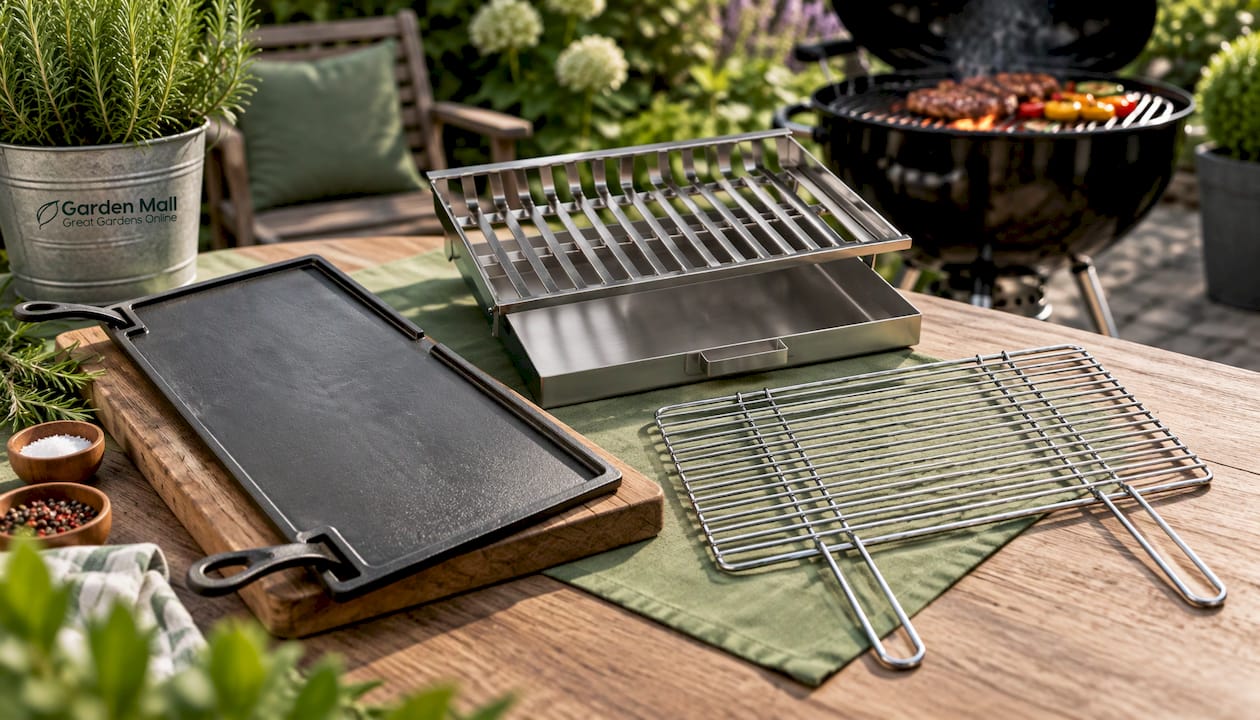
If you have decided which material suits your cooking, our Outdoor Dining range is the place to start. For iron’s heat and searing, the Buschbeck Cast Iron Plancha gives you a flat iron cooking surface. For something sturdy for open-fire cooking, take a look at the Black Heavy Duty Cooking Grill or the Bushbeck Chrome Cooking Grill. If you are building a fire bed, the Bushbeck Stainless Steel Firegrate & Ash Pan pairs a stainless firegrate with an ash pan.
Delivery is free on orders over £70, next-day delivery options are available, and you can return items within 14 days.
If you are also weighing up fire pits, our guide to cast iron vs steel fire pits applies the same logic of heat and upkeep to a different piece of garden kit.
Our perspective
We think the best grate is the one you will actually look after, and that is a refreshingly practical way to choose.
If you love the ritual of the barbecue, the oiling, the heat building, the first hiss of a steak on the iron, cast iron rewards you with sear marks and a surface that improves with use. If you want to light up, cook, wash and put it away, stainless steel keeps everything simple.
Our customers are homeowners, garden enthusiasts, parents and landlords, and what they tell us they want is outdoor living that is easy to enjoy. That is why our outdoor dining range covers iron and stainless, plancha plates, cooking grills and firegrates, so you can match the material to your garden and your habits rather than compromise on both.
Look after whichever you choose, keep it covered and dry, and it will serve you through many summers.
Peter
FAQ
Is cast iron better than stainless steel for grilling?
For searing, yes: cast iron holds more heat and leaves deeper grill marks. Stainless steel is better when you want quick heating and easy cleaning. The better material is the one that fits your cooking and upkeep preferences.
Do cast iron grill grates rust?
They can if they are left damp or unseasoned. A baked-on oil coating protects the iron, so dry the grate after cleaning, wipe on a thin film of oil and store it covered. If you see a spot of rust, scrub it off, dry the grate and season it again.
How often should I season cast iron BBQ grates?
Season new grates before their first cook, then again whenever the surface looks dull, patchy or starts to stick. Many owners oil lightly after every clean and do a full seasoning at the start of the season.
Can I use soap on cast iron grates?
A little mild washing-up liquid will not ruin a well-seasoned grate, but a brush and hot water is usually enough. Dry the grate immediately and oil it afterwards. Stainless steel grates are happy with ordinary soap and water.
Which grill grates are best for a small patio barbecue?
Stainless steel is a practical choice for compact barbecues because it is lighter, quick to heat and easy to store. Check the thickness so the grate stays flat, and see our light charcoal BBQ guide for models that fit small patios.
Sources
- Cast Iron Vs Stainless Steel: Which Is Better For Grill Grates, Tasting Table
- Cast Iron vs Stainless Steel Grill Grates: Which?, Hearth & Patina
