



6 Safe, Simple Steps for Home BBQ Owners to Clean a Gas BBQ
Posted by Amy Hall on 19th Sep 2026
6 Safe, Simple Steps for Home BBQ Owners to Clean a Gas BBQ

To clean a gas BBQ safely, turn off and disconnect the gas supply first, then either burn off light residue for ten minutes or let the barbecue cool fully for a proper deep clean. Work from top to bottom with warm water and mild dish soap, using a bristle-free brush or foil ball rather than a wire brush. A quick wipe after every cook and a seasonal deep clean twice a year will keep it safe and running well.
TL;DR:
- Most cleaning can be done with warm water and mild dish soap, avoiding abrasives and wire brushes to prevent damage and safety hazards.
- Deep cleaning the grill twice a year, focusing on grates, heat tents, burners, and the drip tray, helps prevent rust and ensures safe operation.
- Always turn off and disconnect the gas before cleaning, and check for leaks with soapy water to avoid accidents during maintenance.
- Use bristle-free brushes or foil balls for scrubbing to reduce the risk of loose bristles ending up on food or causing damage.
- Regularly empty the drip tray and cover the barbecue after cleaning to protect it from rust, dust, and moisture during storage.
Table of Contents
- Your pre-clean checklist for a gas BBQ
- How do you deep clean a gas BBQ grill?
- What’s the best gas BBQ cleaner to use?
- Is it safe to clean a gas BBQ yourself?
- How often should you clean a gas barbecue?
- Why most people over-clean the wrong parts
- Keep your gas BBQ running with the right accessories
- Where to check model-specific cleaning advice
- Sources
- FAQ
Your pre-clean checklist for a gas BBQ
Before you touch a scraper, run through this five-minute setup. It saves you from stopping halfway through with soap on your hands and no gloves in sight.
- Turn off and disconnect the gas. Shut the control knobs, then isolate the cylinder or mains supply at the regulator before you do anything else.
- Choose your clean. Decide whether this is a quick burn-off after cooking or a full deep clean with the barbecue completely cool.
- Set up your space. Lay down a tarp or old towels, fill a tub with warm soapy water, and pull on rubber gloves.
- Clear the grill. Remove leftover food, utensils, and any disposable drip-tray liners before you start scrubbing.
- Check ventilation. If you’re moving the barbecue to clean it, choose a well-ventilated spot away from washing lines and open windows.
With that done, you’re ready to work through the barbecue properly rather than picking at bits as you go.
How do you deep clean a gas BBQ grill?
A proper deep clean covers six areas in order: grates, heat tents, burners, cookbox, drip tray, and exterior. America’s Test Kitchen recommends doing this at the start and end of the grilling season, roughly twice a year, though heavy users may want a third pass mid summer.
Step 1: Confirm the gas is off and let things cool. If you’re only tackling light residue, preheat the barbecue and burn off for 10 to 15 minutes with the lid closed, then let it cool slightly before scraping. For a full deep clean, wait until the grill is completely cold.
Step 2: Take out the grates and soak them. Cast iron, stainless steel, and porcelain-coated grates each need slightly different treatment.
- Cast iron: soak briefly, scrub gently, dry immediately, then re-season with a thin layer of cooking oil to stop rust taking hold.
- Stainless steel: soak in warm soapy water or a vinegar and bicarbonate of soda paste for stubborn carbon, then rinse well.
- Porcelain-coated: stick to mild soap and a soft brush. Anything abrasive will chip the coating and expose the metal underneath.
Step 3: Remove and clean the heat tents or flavouriser bars. These metal covers over the burners collect grease and carbon fast. Soak them alongside the grates, then scrub with a nylon brush to lift baked-on residue.
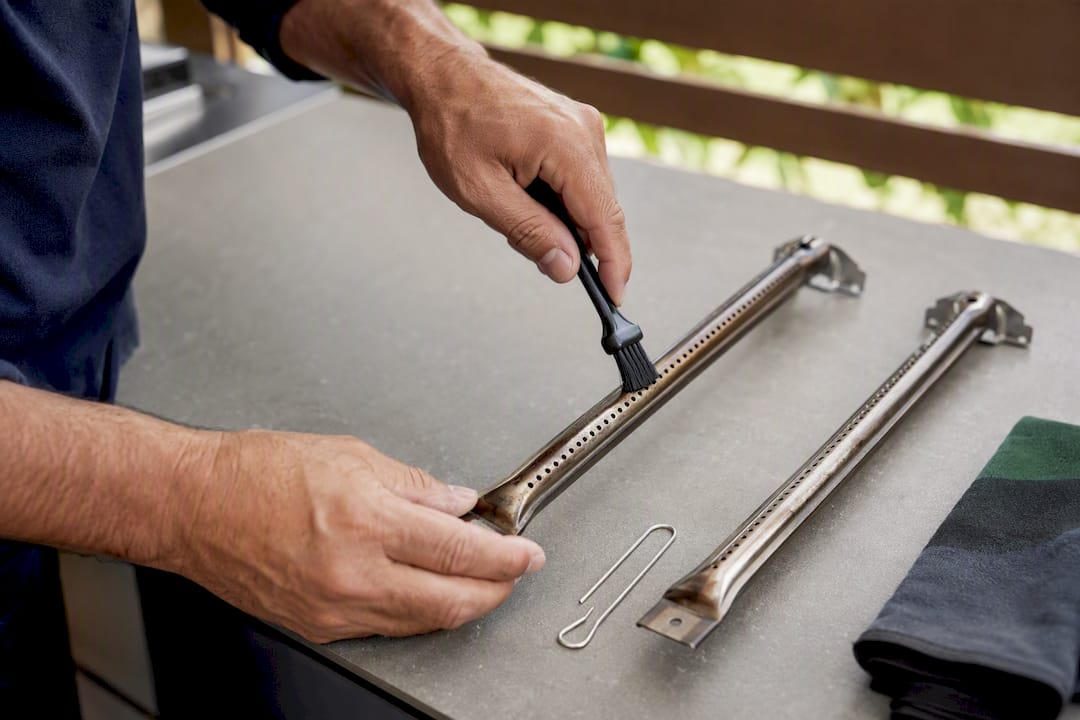
Step 4: Clean the burners and venturi tubes with care. Brush along the length of the burner, up and down rather than side to side, so debris drops away instead of getting pushed further into the tube. Clear blocked port holes with a soft brush or a straightened paper clip, working gently so you don’t widen or damage the holes.
Step 5: Scrape the cookbox and empty the drip tray. Scrape loose carbon and grease down into the tray below, then lift it out, wash it properly, and dry it before replacing any disposable liner.
Step 6: Wipe the exterior, dry everything, and reassemble. Clean control knobs and outer panels with mild detergent on a soft cloth, then dry thoroughly to stop rust forming on stainless surfaces. Reconnect the gas and check for leaks and proper ignition before you cook anything on it.
Pro Tip: Dry every part completely before reassembly. Damp grates and burners left overnight are one of the most common causes of rust and stubborn corrosion on gas barbecues, even ones only a year or two old.
What’s the best gas BBQ cleaner to use?
Warm water and a mild washing-up liquid handle most jobs, and Good Food’s cleaning guide recommends avoiding abrasive chemicals altogether, since they can damage stainless steel finishes. For carbon that won’t budge, a paste of white vinegar and bicarbonate of soda left to sit for a few minutes before scrubbing works nearly as well as branded grill cleaners, without the harsh chemical smell.
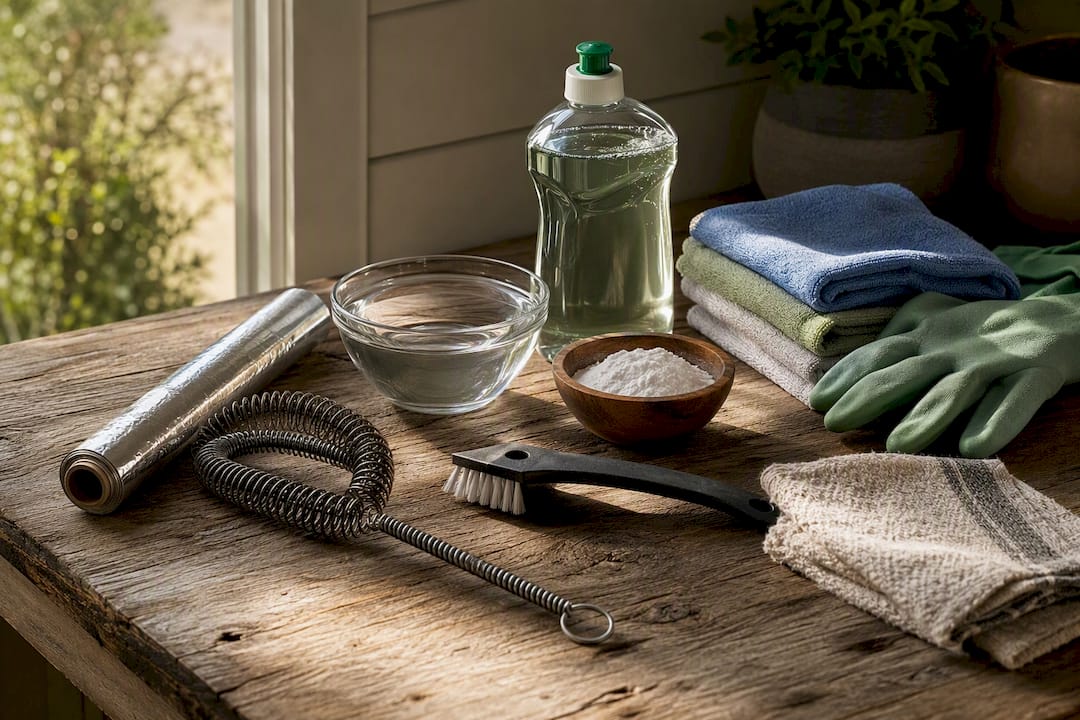
Skip the wire brush entirely. Loose bristles can snap off, stick to the grates, and end up on your plate, which is why bristle-free coiled brushes, plain nylon brushes, or a scrunched ball of aluminium foil have become the safer standard choice. Stainless-steel wool works on heavy carbon deposits, but never use it on porcelain-coated grates, as it will scratch straight through the coating.
Handy kit to keep by the barbecue includes bristle-free coiled brushes or nylon grill brushes, aluminium foil for scrunching into a scraper, white vinegar and bicarbonate of soda, mild washing-up liquid, soft cloths, rubber gloves, and old towels
Avoid oven cleaner on any coated or painted part. It’s designed for bare metal and will strip coatings meant to protect your grates and cookbox.
Is it safe to clean a gas BBQ yourself?
Cleaning a gas BBQ is safe when you follow a few non-negotiable steps around the gas itself. Always turn off the supply at the control knobs first, then isolate it at the cylinder or regulator before you start any deep clean.
To check for leaks, mix soapy water and brush it over the hose connections and regulator with the gas turned back on and the knobs off. Bubbles forming at a joint mean a leak, and that’s your signal to stop and call a professional rather than trying to tighten anything yourself.
- Never pour water on a grease fire. Manufacturer manuals warn that this can spread burning fat rather than put it out.
- Turn off the gas supply immediately and close the lid to smother small flare-ups.
- Check burner ports before your first cook of the season. Spiders and insects nesting in venturi tubes over winter is a genuinely common cause of blocked burners and dangerous flashback.
A blocked venturi tube doesn’t just mean patchy heat. It can force gas back out through the control valve instead of up to the burner, which is exactly the kind of fault manufacturer manuals flag as a reason to inspect before every new season.
How often should you clean a gas barbecue?
Small habits after every cook do more work than any single deep clean. Once the food’s off, burn the grates off for a few minutes with the lid down, scrape while still warm, then give the exterior a quick wipe.
- After each use: burn off, scrape with a foil ball or nylon brush, wipe down surfaces.
- Monthly, or after heavy use: remove and soak grates, clean the flavouriser bars, glance over the burners for blockages.
- Start and end of the grilling season: full deep clean, plus a check of hoses, the regulator, and all seals for cracking or wear.
- Storage: use a fitted cover and, for cast-iron grates, a light coat of oil to stop rust setting in over winter.
Leaving grease in the tray doesn’t just risk flare-ups. It taints the flavour of everything you cook next, which is reason enough on its own to empty it after every few uses.
Why most people over-clean the wrong parts
The barbecue owners who struggle most aren’t lazy about cleaning. They’re thorough about the wrong things. People will scrub grates until they gleam and then completely ignore the venturi tubes, which is backwards: a blocked burner port is a safety issue, while a slightly carbonised grate is, at worst, a flavour issue.
The wire brush habit is worth retiring properly, not just noting in passing. Once you’ve switched to a coiled bristle-free brush or a foil ball, you’ll notice you’re pressing harder and cleaning more thoroughly, because you’re not relying on stiff metal bristles to do the work for you. That’s a genuine improvement in technique, not just a safety swap.
The other pattern worth naming: people deep clean once a year, usually in spring, and skip the fixed-price. Two seasonal cleans, spring and autumn, catch problems, like a spider-blocked venturi, before they turn into a scorched dinner or worse. If you only do one clean a year, do it before the season starts, not after it ends, since a barbecue left dirty over winter gives grease and moisture months to do their damage.
— Peter
Keep your gas BBQ running with the right accessories
Once your barbecue is properly clean, a good cover is what actually protects that work. Great Gardens Online stocks a wide range of outdoor living accessories alongside barbecues and dining sets, including covers, replacement grates, and drip-tray liners designed to fit common gas barbecue models. Fitted covers cut down on rust and cut your cleaning time next season, since a covered grill picks up far less dust, pollen, and rainwater between cooks.

Check the product specs and dimensions against your own model before ordering, particularly for replacement grates, since fit varies between manufacturers. If you’re building out your outdoor cooking space rather than just maintaining it, browse the outdoor dining range for tables and accessories that pair with your barbecue setup. Free delivery is generally available on larger orders, and next-day delivery options may be offered for certain items. Visit Great Gardens Online to see current stock and start your order.
Where to check model-specific cleaning advice
For guidance tailored to your exact model, start with your manufacturer’s manual, which covers burner ports and grease-fire handling. Good Food’s cleaning guide and America’s Test Kitchen’s deep-clean walkthrough are both solid general references. If you’re rethinking your garden layout around the barbecue, fire pit seating guidance covers safe spacing and layout too.
Sources
- How to clean a BBQ - gas, charcoal and Kamado cleaning tips | Good Food
- How to Deep Clean a Gas Grill | America’s Test Kitchen
- Char-Broil PROFESSIONAL Series Manual | ManualsLib
FAQ
Can I use WD-40 to clean my barbecue grill?
No. WD-40 and similar lubricants are petroleum-based and not food-safe, so they shouldn’t touch grates, burners, or anything that comes into contact with food. Stick to warm water and mild dish soap, or a vinegar and bicarbonate of soda paste for stubborn carbon.
Are you supposed to clean the inside of a gas grill?
Yes. The cookbox, burners, venturi tubes, and drip tray all need regular attention, not just the visible grates. Skipping the inside increases the risk of grease fires and blocked burner ports, which manufacturer manuals specifically warn against.
How do I clean my gas BBQ grill?
Disconnect the gas, remove the grates, and soak them in warm soapy water or a vinegar and bicarbonate paste while you scrape the cookbox and empty the drip tray. Clean burners and venturi tubes by brushing up and down, then wipe the exterior and reassemble once everything is completely dry.
How do I deep clean my gas grill?
A full deep clean means stripping the barbecue down to grates, heat tents, burners, and drip tray, cleaning each separately, and doing it with the barbecue completely cool. America’s Test Kitchen recommends doing this roughly twice a year, at the start and end of the grilling season.
What should I do if grease catches fire on my barbecue?
Turn off the gas supply immediately and close the lid to cut off the oxygen supply, which will usually smother a small flare-up. Never pour water on a grease fire, since manufacturer guidance warns it can spread burning fat rather than extinguish it.
