


Choose Speed or Smoke: Charcoal vs Gas BBQ for Backyard Cooks
Posted by Amy Hall on 4th Sep 2026
Choose Speed or Smoke: Charcoal vs Gas BBQ for Backyard Cooks
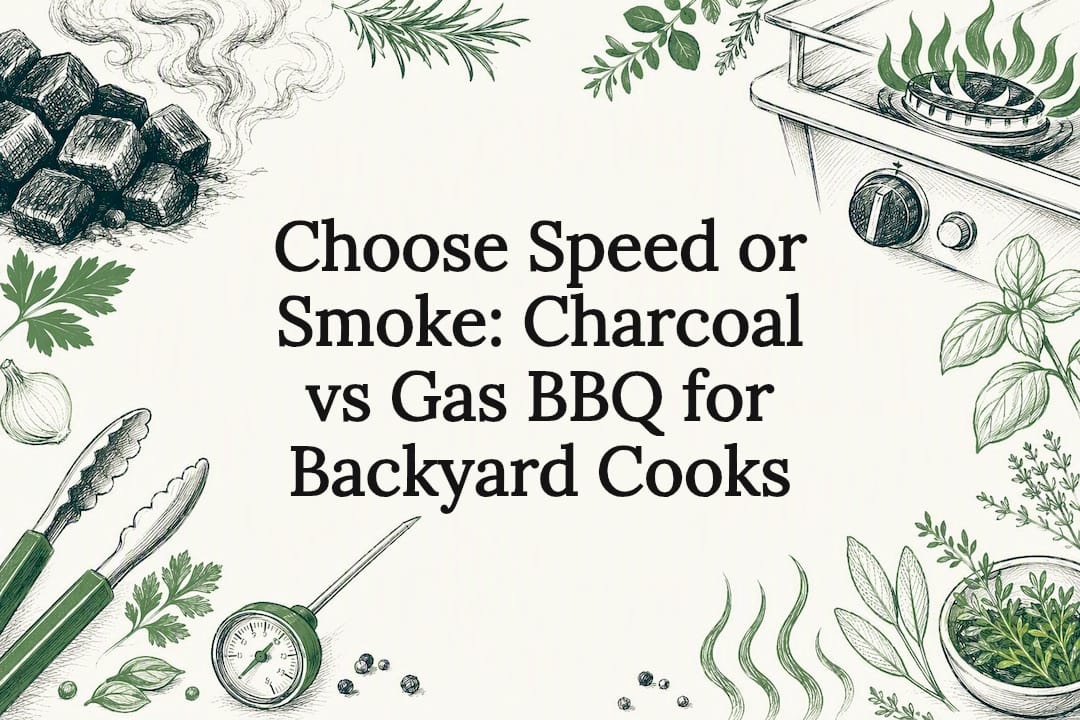
If you want speed and low fuss on a weeknight, gas is the practical winner. If you want deeper smoke flavour and don’t mind a bit of ritual, charcoal usually tastes better and rewards the effort. Space, storage and how often you actually grill can flip that verdict, so the detail below is worth reading before you buy.
TL;DR:
- Charcoal grills reach higher temperatures over 1,200°F but require at least 30 minutes to heat, while gas grills heat in about 10 minutes but max out around 900°F.
- Charcoal provides richer flavor and better smoke infusions, especially for slow-cooked meats, but produces more smoke, ash, and requires more cleanup.
- Gas grills are more convenient for quick weeknight meals, with a faster setup, easier temperature control, and less environmental impact.
- Charcoal is cheaper upfront but more costly over time due to fuel expenses, whereas gas has a higher initial price but lower ongoing fuel costs for frequent use.
- Choose based on your grilling frequency, space for fuel storage, and local restrictions, considering owning both for versatile outdoor cooking.
Table of Contents
- Charcoal vs gas BBQ: quick comparison at a glance
- Flavour and cooking results: why charcoal often wins
- Temperature range and control: what each fuel can actually do
- Ease of use, setup and speed
- Cost: upfront price vs running costs
- Health, smoke and environmental considerations
- Maintenance and durability
- What to cook on each: clear use cases
- How to choose: checklist, questions and red flags
- Publisher perspective: practical tips from Greatgardensonline
- How Greatgardensonline can help you choose the right barbecue
- Sources
Charcoal vs gas BBQ: quick comparison at a glance
Here’s the practical breakdown for anyone weighing charcoal grilling advantages against the ease of a gas or charcoal barbecue decision made purely on convenience.
- Heat-up time: gas is ready in roughly 10 minutes; charcoal needs at least 30 minutes to reach cooking temperature.
- Peak temperature: charcoal can push past 1,200°F; standard gas tops out around 500°F, with premium sear burners reaching closer to 900°F.
- Cleanup: gas leaves you with a grease tray to empty; charcoal leaves ash and a grate that needs scrubbing.
- Cost shape: charcoal units are cheaper to buy, gas cylinders cost more upfront but often work out steadier per session.
- Best use: gas suits quick weeknight meals; charcoal suits weekend low-and-slow cooks and big sears.
Flavour and cooking results: why charcoal often wins
Charcoal and wood produce far more flavour compounds than a clean-burning gas flame, because incomplete combustion releases phenols and other aromatic particles that settle on the food. Gas burns almost entirely clean, which is exactly why it heats fast but tastes flatter on anything left over the flame for a while.
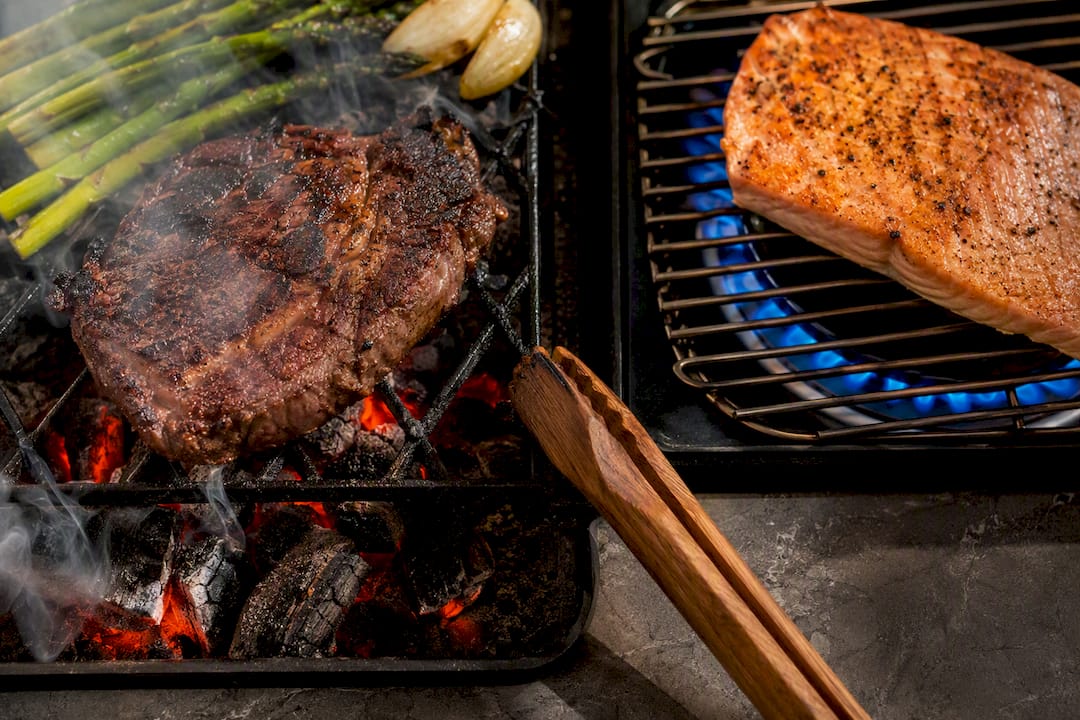
The difference shows up most on thick steaks, whole chickens and anything smoked for hours. A quick-seared thin burger or a few skewers of vegetables barely notice the fuel type, since there simply isn’t time for smoke to penetrate.
You don’t have to give up gas convenience entirely to get some smoke character:
- Add a dedicated smoker box or a foil parcel of soaked wood chips over one burner.
- Keep chips away from direct flame so they smoulder rather than combust.
- Use hardwoods like oak, hickory or fruitwoods rather than resinous softwoods.
Pro Tip: Aim for thin, almost invisible blue smoke rather than thick white or grey clouds. Thick smoke usually means unburnt creosote, which tastes bitter and coats food with soot rather than flavour.
Temperature range and control: what each fuel can actually do
Charcoal’s ceiling is dramatically higher than gas. It can exceed 1,200°F, useful for a proper steakhouse-style crust, while a standard gas grill sits nearer 500°F and even premium sear burners max out around 900°F. That gap matters if you sear regularly, less so if you mostly cook chicken thighs and sausages.
Setting up zones works differently on each:
- Charcoal: bank coals to one side for a hot zone, leave the other bare for indirect cooking.
- Gas: light one or two burners fully and leave others off or low for the same effect.
- Wind and drafts: charcoal is more affected by wind pulling heat unevenly; vents need adjusting to compensate.
- Hot spots on gas: rotate food occasionally, since burner tubes can create uneven heat bands.
Ease of use, setup and speed
This is where gas or charcoal barbecue choices are usually decided in practice, not on paper.
- Gas grills need about 10 minutes to fire up: turn the valve, ignite, close the lid, and you’re cooking.
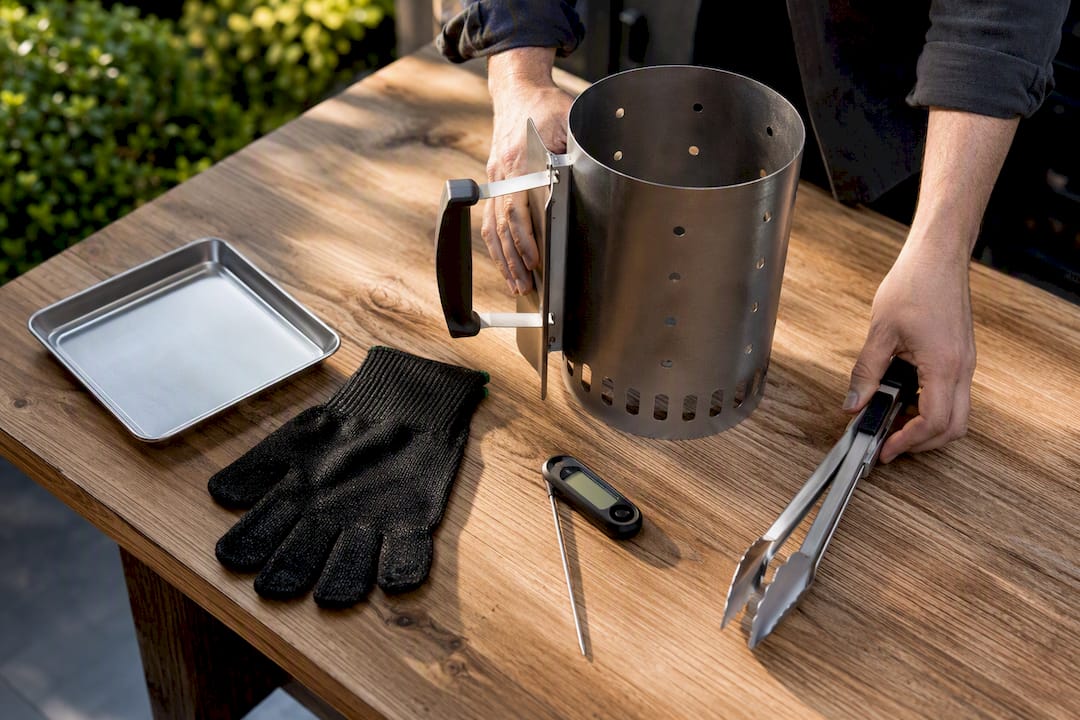
- Charcoal needs 30 minutes or more: light the coals (a chimney starter helps enormously here), wait for them to ash over, then spread and stabilise the temperature.
- Mid-cook, gas users mostly just adjust dials; charcoal cooks manage airflow through vents and sometimes add fuel.
- Cooldown and cleanup take longer on charcoal too, since ash needs to cool fully before disposal.
If you grill on a Tuesday after work, that half-hour gap adds up fast over a season.
Cost: upfront price vs running costs
Charcoal barbecues are usually cheaper to buy than gas models of comparable build quality, often by a noticeable margin at the entry level. The catch comes later.
- Charcoal: lower purchase price, but bags of lumpwood or briquettes add up over a season of regular use.
- Gas: higher upfront cost, but a full propane cylinder covers many sessions before needing a refill.
- Accessories: chimney starters, smoker boxes and grill covers add modest costs to either type.
The pattern to watch: if you grill only occasionally, charcoal’s lower purchase price usually wins overall. Grill several times a week and gas often becomes the more economical option once fuel costs are totalled across a season.
Health, smoke and environmental considerations
Charcoal combustion creates ash and generally produces more visible smoke and particulates than gas, which burns cleaner with essentially no ash residue.
- Keep the burn clean: dense white smoke signals incomplete combustion, not extra flavour.
- Avoid flare-ups by trimming excess fat and not overloading the grill with oily marinades.
- If you’re on a balcony or shared courtyard, check any building or estate rules before using charcoal, since many restrict open flame and ash disposal.
- Let ash cool fully, ideally overnight, before binning it in a metal container.
Maintenance and durability
Routine care differs by fuel type but both need regular attention to last.
- Charcoal: empty ash after every use and scrub grates before rust sets in.
- Gas: check the grease tray regularly and inspect burner tubes for spider nests or blockages, a surprisingly common cause of uneven heat.
- Both benefit from a breathable cover and a dry storage spot over winter to prevent corrosion on hinges and vents.
What to cook on each: clear use cases
Matching food to fuel takes the guesswork out of a gas vs charcoal flavour debate.
- Steaks: charcoal for a thick sear, gas for a quick weeknight ribeye.
- Burgers: gas is fine, since fast cooking means the flavour gap barely registers.
- Vegetables: either works; charcoal adds a touch more char.
- Pizza: charcoal with a pizza stone gets closer to a wood-fired result.
- Brisket and slow-smoked roasts: charcoal, ideally with a snake or Minion method to hold steady heat for hours without constant refuelling.
How to choose: checklist, questions and red flags
Work through this before you commit to either fuel.
- How often will you actually grill? Weekly favours gas; occasional weekend cooking favours charcoal’s lower price.
- Do you have space to store cylinders or bags of fuel safely and dry?
- Are there local or building restrictions on charcoal or open flame near your property?
- Does the model take standard-size gas cylinders or replaceable parts, so you’re not locked into one supplier?
Ask any retailer about warranty length, whether replacement burners or grates are available, and what fuel type the unit actually needs. A model with vague or unavailable spare parts is a clear warning sign, and so is a second-hand gas grill with no visible service history on the regulator and hose.
Pro Tip: A basic chimney starter, a reliable probe thermometer and long-handled tongs solve most beginner mistakes on either fuel type, and cost far less than a bad first barbecue put you off grilling entirely.
Publisher perspective: practical tips from Greatgardensonline
Most people overthink this decision. Buy gas if you’ll use it midweek, buy charcoal if weekend flavour matters more than speed, and if space and budget allow, plenty of keen cooks end up happily owning both.
— Peter
How Greatgardensonline can help you choose the right barbecue
This retailer stocks both gas and charcoal barbecues side by side, so you can compare real models rather than guessing from spec sheets alone. The range covers entry-level charcoal kettles, mid-range gas grills, protective covers and the accessories mentioned throughout this guide, from chimney starters to smoker boxes.

Free delivery and next-day delivery options mean you’re not waiting weeks to get cooking once the weather turns. Easy returns take the risk out of trying a new fuel type if it doesn’t suit your routine. Browse the full barbecue and outdoor cooking range to compare current models and accessories before your next weekend cook.
Sources
The Serious Eats grilling guide breaks down practical decision factors for home cooks. AmazingRibs offers detailed temperature testing and buying advice. Lifehacker covers heat-up times clearly, and BobVila compares long-term running costs between fuel types.
