


14–18 Inch Light Charcoal BBQs That Fit Small Patios
Posted by Amy Hall on 10th Sep 2026
14–18 Inch Light Charcoal BBQs That Fit Small Patios
If you want a light charcoal BBQ for a patio or small garden, choose a compact kettle or portable kamado in the 14 to 18 inch range. That size balances cooking capacity, portability and proper smoky flavour without turning your barbecue into a two-person moving job.
TL;DR:
- Choose a portable grill between 14 and 18 inches for optimal balance of cooking capacity, weight, and smoky flavor.
- An 18-inch model is better suited for hosting six people, while a 14-inch grill comfortably feeds two to four.
- Porcelain-enamelled steel offers the best durability-to-weight ratio for frequent use and outdoor storage.
- Under 11 pounds, grills typically have smaller cooking areas but are significantly easier to carry and transport.
- Proper ash management, stabilizing features, and a locking lid are essential for safety and ease of maintenance.
Table of Contents
- What makes a good light charcoal BBQ?
- What size charcoal BBQ feeds how many people?
- Which materials hold up best for a portable grill?
- How light does a “portable” charcoal BBQ need to be?
- How do you keep a small charcoal grill safe and easy to maintain?
- Why choose charcoal over gas or electric?
- A shop-floor perspective on light charcoal BBQs
- Where to buy a light charcoal BBQ that fits your patio
- Sources
What makes a good light charcoal BBQ?
A “light” charcoal BBQ, in practical terms, is one you can lift and move without help, store in a shed or cupboard over winter, and still cook a proper meal on. It’s a portable charcoal grill rather than a full-size charcoal barbecue bolted to a patio corner. Think small portable charcoal grills like the Weber Smokey Joe or compact ceramic kamados, rather than a garden centre’s largest models.
Getting the choice right comes down to four practical questions.
- How many people will you usually feed? A grill for two is a different purchase from one for a family barbecue with friends over.
- Weight versus durability? The lightest grills trade some longevity for portability. Heavier gauge steel or ceramic lasts longer but is harder to shift.
- What do the vents, lid and legs actually do? Airflow controls, a locking lid and stable feet affect both cooking results and how safely the grill handles being moved.
- What does your budget realistically buy? Small kettles under £100 tend to be basic; £100 to £250 buys sturdier steel and better ash systems; premium ceramic options start above £250.
On that last point, buying guides consistently flag intake and exhaust vents, grate durability, ash management and a stable base as the features that separate a grill worth keeping from one you’ll replace within a season. Cheap grills often skip adjustable vents entirely, which makes heat control a matter of luck rather than skill.
Pro Tip: Test the lid lock and handle before you buy, not after. A locking lid that doubles as a carry handle is the difference between a grill you actually take on trips and one that stays parked on the patio out of inertia.
What size charcoal BBQ feeds how many people?
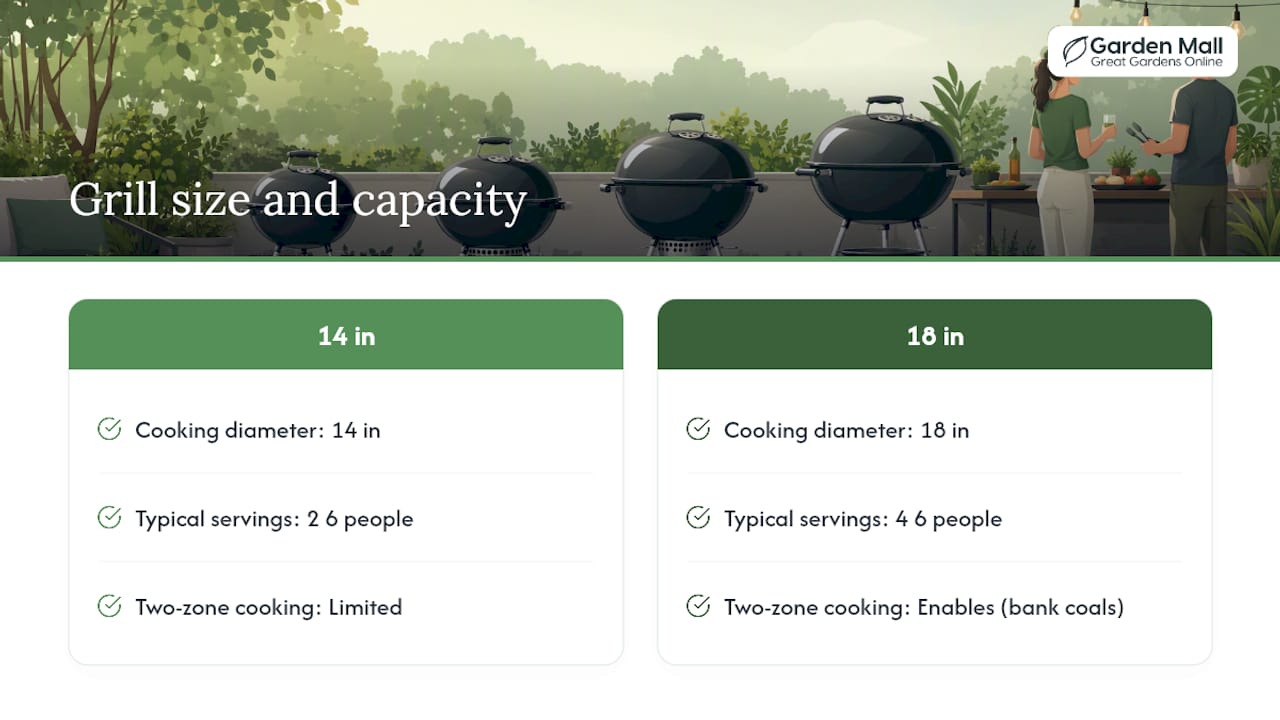
Grill diameter maps fairly predictably onto how many mouths you can feed at once. A 14-inch cooking surface typically feeds 2 to 4 people, which suits a couple or small family doing regular weeknight grilling. Step up to an 18-inch surface and you’re catering for 4 to 6, with enough room for genuine two-zone cooking, where one side runs hot for searing and the other stays cooler for slower cooking.
Two-zone cooking matters more on a small grill than people expect. Bank your charcoal to one side rather than spreading it evenly, and you get a hot zone for steaks or burgers and a gentler zone for chicken thighs or vegetables that need longer without scorching. It’s the single biggest technique upgrade available to anyone stepping up from a 14-inch grill.
If you host occasionally but not often, an 18-inch model is the safer bet. Cooking for two on it is easy; cooking for six on a 14-inch grill involves batches, delays and a queue of hungry guests.
Which materials hold up best for a portable grill?
Construction material decides most of what you’ll love or resent about your grill within a year of buying it. Porcelain-enamelled steel resists rust well and cleans easily, making it the sensible middle ground for most patio buyers. Thinner uncoated steel keeps weight down further but scratches and corrodes faster, especially if left outdoors uncovered. Ceramic kamados sit at the other end: heavier, pricier, but they retain heat exceptionally well and reward anyone willing to master slower cooking.
- Grates matter almost as much as the body. Cast iron sears better and holds heat longer, but needs oiling to avoid rust; chrome-plated steel is lower maintenance but sears less aggressively.
- Budget buyers generally do best with porcelain-enamelled steel kettles, which balance cost and durability.
- Frequent users benefit from investing in cast iron grates and a sturdier steel body that survives weekly use.
- Flavour-focused cooks tend to gravitate towards ceramic kamados, accepting the extra weight for better heat retention and smoke control.
None of these choices is wrong, exactly. They just suit different priorities, and it’s worth being honest with yourself about which one you actually are before you buy.
How light does a “portable” charcoal BBQ need to be?
Genuine portability has a number attached to it, not just a marketing claim. Tests of popular models found weights ranging from under 10 lb to over 50 lb, with truly one-person-portable grills sitting under 20 lb. Some of the lightest, most popular models weigh closer to 9 to 13 lb, light enough to carry one-handed to a car boot or a friend’s garden.
A few features separate a grill that’s technically light from one that’s practically portable:
- Lid locks that double as carry handles keep charcoal and ash contained during transport.
- Fold-away legs shrink the footprint for storage in a shed or car boot.
- Rubber feet protect decking and stop the grill sliding on smooth patios.
- A carry bag or cover extends the life of a grill that spends time outdoors between uses.
If under 11 lb sounds appealing, expect a smaller cooking area in return. There’s no version of physics where you get an 18-inch cooking surface at Smokey Joe weight.
How do you keep a small charcoal grill safe and easy to maintain?
Ash management is where cheap grills fall down fastest. Look for a removable ash catcher or an easy-clean tray system, sometimes marketed as one-touch cleaning, which lets you tip spent ash straight into a bin rather than scooping it out by hand.
- Check clearances before every use. Keep at least a metre from fences, decking rails and anything flammable, and check any building or lease rules if you’re on a balcony or rented property.
- Empty the ash catcher after each cook, once fully cooled, to stop it clogging future airflow.
- Store the grill covered and dry over autumn and winter to prevent rust taking hold on steel components.
- Wipe grates while warm rather than letting cooked-on residue harden overnight.
Pro Tip: Ash stays warm far longer than it looks. Give it a full hour of cooling before you empty it into anything other than a metal bin.
Why choose charcoal over gas or electric?
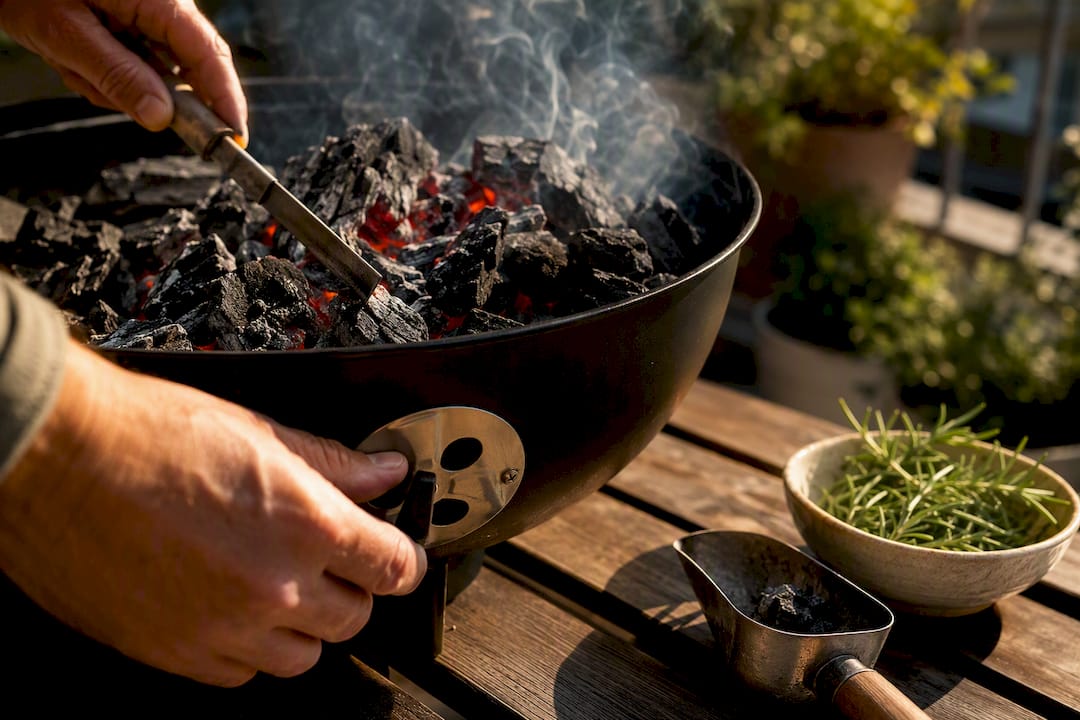
Charcoal earns its extra effort through flavour and control. Reviewers consistently point to the smoky depth and hands-on ritual as the real draw of portable charcoal grills over gas, which cooks cleaner but flatter. Set aside roughly 20 to 25 minutes from lighting charcoal to reaching cooking temperature, plus a short learning curve on managing airflow for your first few cooks.
If you want speed and minimal fuss, gas or electric wins. If you’re cooking for pleasure as much as for dinner, and you don’t mind the extra 20 minutes, charcoal delivers something neither can match.
A shop-floor perspective on light charcoal BBQs
Most buying guides treat portability as a compromise, something you accept in exchange for giving up cooking quality. That framing gets it backwards. A well-built 14 or 18-inch grill isn’t a lesser version of a full-size barbecue. It’s a genuinely capable cooking tool that happens to also fit in a car boot, and for most households that never cook for more than six people at once, it’s arguably the more sensible purchase, not the compromise one.
The overlooked risk isn’t buying too small. It’s buying based on aspiration rather than actual use, choosing a large grill for hosting scenarios that happen twice a year while doing weekly maintenance on a barbecue that’s oversized for the other fifty weeks. Size to your normal week, not your July barbecue.
— Peter
Where to buy a light charcoal BBQ that fits your patio
You can find a selection of compact charcoal barbecues alongside accessories that make small-space grilling straightforward, from ash tools to covers sized for portable models, as well as decorating a small apartment patio with smart ideas to enhance your grilling space. Delivery options and returns policies vary, so check the store’s website for current details on shipping, returns, and delivery times.
Before you check out, run through the same three checks covered above: confirm the cooking area suits your household size, weigh up how often you’ll actually carry the grill versus leave it in place, and check the ash system is one you’ll be happy emptying after every cook. Browse the current range on the Great Gardens Online shopping pages to compare compact kettles and portable kamados side by side, and get your next barbecue on the patio rather than stuck on a wish list.
