


Stop Shady Pots Dying: RHS Guidance on Shade Plants and Pot Care UK
Posted by Amy Hall on 22nd Sep 2026
Stop Shady Pots Dying: RHS Guidance on Shade Plants and Pot Care UK
Go for hardy foliage first: heuchera, hosta, fern, astilbe, brunnera and bergenia give you a display that survives a British winter, then tuck in a few seasonal begonias or busy Lizzies for colour. The one rule that matters more than plant choice is the pot itself: always choose a container with proper drainage, raised on feet if you can, and filled with peat-free compost. Match the plant to your exact type of shade and you’re already ahead of most gardeners.
TL;DR:
- Heuchera, hosta, fern, astilbe, brunnera, and bergenia form a durable foliage base suitable for UK shade, with seasonal flowers like begonias or busy Lizzies adding color.
- Proper drainage, deep containers, and peat-free compost are essential, especially for deep-shade spots where moisture levels can vary and roots need insulation.
- Water containers based on moisture feeling rather than a fixed schedule, and remove saucers in winter to prevent waterlogging and root damage.
- Deep, frost-resistant pots on feet or bricks enhance winter survival, with larger, deeper containers accommodating plant growth and moisture retention.
- Choose pots from specialized suppliers offering deep, frost-resistant options that are lightweight for movement and can be easily replaced or adjusted as plants grow.
Table of Contents
- The best shade plants for pots in the UK
- How to choose the right plant and pot for your shaded spot
- Planting and caring for shade plants in containers
- Seasonal and winter care for shade pots
- A practical checklist for shade containers
- Where to find pots that suit shaded spaces
- Sources
- FAQ
The best shade plants for pots in the UK
Garden centres are full of tempting flowers that sulk and die the moment they meet a shady corner. These are the ones the RHS actually recommends for shaded pots, and each one earns its place for a different reason.
-
Heuchera — This is the workhorse of shade containers. Its compact, colourful foliage (ranging from lime green to near-black, depending on the cultivar) copes with light to partial shade and shrugs off dry spells that would flatten a hosta. It suits small to medium pots and rarely needs dividing more than every few years. Worth knowing: darker-leaved cultivars tolerate more sun, while paler ones bleach if the light gets too bright, so use leaf colour as a rough guide to how much shade your spot really gets.
-
Hosta — Bold, architectural leaves that thrive in moist partial shade. Hostas want a deeper pot than most people give them, plus consistent moisture, because a container that dries out even once can scorch the leaf edges for the whole season.
-
Ferns — Hart’s-tongue, common polypody and soft shield fern all bring evergreen structure to deep or dappled shade where almost nothing else will grow. They’re the plants that keep a shaded pot looking alive in January.
-
Astilbe — Feathery summer plumes in pink, red or white, but only if the compost stays evenly moist. This is not a plant for a dry, wind-tunnel balcony; give it a deeper pot and a spot that doesn’t bake.
-
Brunnera and tiarella — Silvery, patterned foliage with delicate spring flowers. Both work brilliantly as companion plants around a taller hosta or fern in a medium-sized pot, filling gaps without competing for space.
-
Bergenia — Sometimes dismissed as old-fashioned, but its robust, leathery leaves earn their keep through winter when everything else has died back. It tolerates damp, cooler corners better than most perennials on this list.
-
Seasonal colour: begonias, busy Lizzies, bacopa and torenia — For a splash of flower on top of your foliage framework, the RHS points to begonias, busy Lizzies (Impatiens), bacopa and torenia as reliable performers in light or partial shade over summer. Treat these as the seasonal layer, not the backbone.
A quick note on moisture: hosta and astilbe want reliably damp compost, while heuchera and bergenia tolerate things drying out between waterings. Check mature sizes before you buy, too. A hosta bought as a small plug can spread to 60cm or more across, and a pot that looked generous in April can feel crowded by August.
How to choose the right plant and pot for your shaded spot
Not all shade is equal, and this is where most container displays go wrong. Watch your spot across a full day before you buy anything.
- Light or partial shade gets a few hours of direct sun, usually morning or evening. Most plants on the shortlist above will manage here, including the seasonal flowering options.
- Dappled shade (under an open canopy) shifts between light and shadow all day. Ferns, brunnera and tiarella do especially well.
- Deep shade gets little to no direct sun. Stick to ferns, hosta and bergenia rather than anything that flowers heavily.
- Dry shade under mature trees is deceptive. It’s shaded but often bone dry, because tree roots pull moisture from the soil before it reaches anything else nearby. Heuchera and bergenia cope far better here than hosta or astilbe.
Once you know your shade type, the pot matters just as much as the plant. Choose a container with drainage holes as standard, made from a frost-resistant material such as terracotta rated for outdoor use, fibreglass or heavy-duty plastic. Raise it on pot feet or bricks to keep the base clear of standing water, and go deeper rather than wider wherever you can. A larger, deeper pot holds moisture more evenly and forgives the odd missed watering, which matters more in shade than most people expect.
Use peat-free multipurpose compost, plant at the same depth the plant was growing in its original pot, and leave a small gap below the rim so watering doesn’t wash compost over the edge. Crocks over the drainage hole are only necessary if the hole itself is unusually large, around 2.5cm or more.
If you’re renting, resist the urge to buy one huge showpiece pot. Several medium pots are easier to move, easier to protect over winter, and let you rearrange the display as plants grow or as you move house.
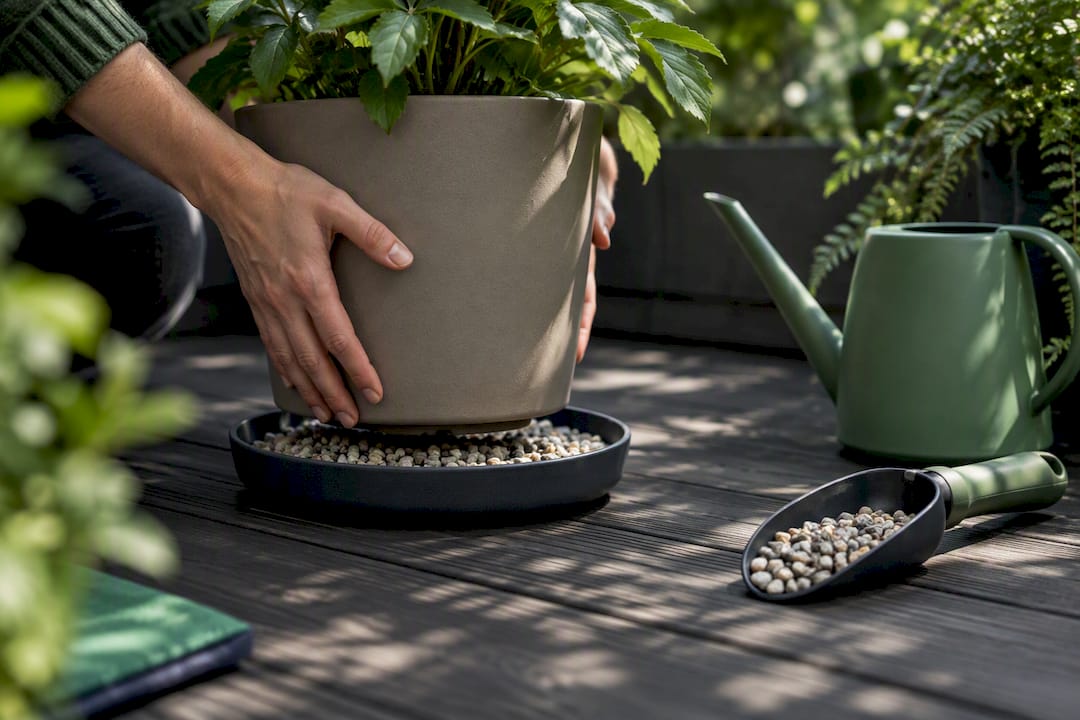
Pro Tip: Stand new pots on saucers filled with gravel rather than plain trays. It lets excess water drain away instead of sitting under the roots, without losing the benefit of a saucer catching drips on a balcony or decking.
Planting and caring for shade plants in containers
Getting a shaded pot right is less about clever tricks and more about doing a handful of basics consistently.
-
Plant with drainage in mind. Check the pot has holes, use peat-free compost, and settle plants at their original depth. Firm gently and water thoroughly straight after planting so roots make contact with the compost. This follows the RHS’s standard container planting method.
-
Water by feel, not by calendar. Push a finger into the compost about a third of the way down. If it’s dry there, water; if it’s still damp, leave it. The RHS notes there’s no fixed schedule that works for every pot, because aspect changes everything. A north or east-facing spot dries slowly, while a south or west-facing balcony pot can need watering daily during a hot spell.
-
Feed lightly through the growing season. Containers hold a fraction of the compost volume a border does, so nutrients run out faster. A light, regular liquid feed from spring to late summer keeps foliage plants like hosta and heuchera looking their best.
-
Divide overcrowded perennials. When a hosta or astilbe outgrows its pot, lift it in spring, split the clump, and repot the strongest sections with fresh compost.
The mistakes that trip people up most often: leaving a saucer under the pot all winter (it fills with rain and drowns the roots), cramming too many plants in at planting time so nothing has room to establish, and assuming every shaded spot is automatically damp. Dry shade under a tree canopy catches people out every year.
Seasonal and winter care for shade pots
For winter interest, hart’s-tongue fern, common polypody, soft shield fern, heuchera and bergenia carry a shaded container through the coldest months when little else is doing anything. The RHS recommends frost-resistant pot materials and raising containers on feet to stop compost sitting waterlogged after autumn rain.
- Remove saucers from beneath pots once autumn arrives, so water drains freely rather than pooling.
- Move tender seasonal plants like begonias or busy Lizzies indoors or to a sheltered spot before the first frost, since they won’t survive it outdoors.
- Group pots together against a wall or in a corner. This creates a slightly warmer microclimate and cuts down how much cold hits each pot from all sides.
- Position containers where they catch the most available light through winter. Shade gets deeper as deciduous trees lose their leaves, but low winter sun can still reach spots that were fully shaded in July.
A practical checklist for shade containers
Peter’s take: the gardeners who get this right treat pots as portable, foliage led displays, not miniature flowerbeds. Diagnose your shade, pick a deep drained pot, use peat-free compost, plant hardy foliage first, add seasonal colour, then winter-proof or move anything tender.
— Peter
Where to find pots that suit shaded spaces
Once you’ve settled on your plant list, the container becomes the deciding factor between a display that thrives and one that rots by February. Great Gardens Online is worth a look here: rather than hunting round several shops for a pot that’s deep enough for a hosta and frost-resistant enough to survive outdoors all year, its Outdoor Pots & Planters range covers exactly that gap, alongside free delivery on orders over £70 and next-day delivery options for when you want to get planting this weekend.
Look specifically for deeper pots if you’re growing hosta or astilbe, frost-resistant materials such as fibreglass or treated terracotta for anything staying out all winter, and lightweight fibreglass options if you’ll need to shift pots around a balcony or shared courtyard. Easy returns within 14 days mean you’re not stuck if a pot turns out too small once the plant fills out. Browse the range and pick the pot before you buy the plant; it saves a second trip once you realise your new hosta needs a bigger home than the one you’ve got.
FAQ
What are the best shade plants for pots in the UK?
Heuchera, hosta, ferns, astilbe, brunnera and bergenia form a reliable foliage base, backed by the RHS’s own shortlist for shade planting. Add begonias or busy Lizzies for seasonal colour on top of that framework.
Do shade plants in pots need less watering?
No, often the opposite. Containers hold far less compost than a border, so they dry out faster, and the RHS advises checking moisture a third of the way down with a finger rather than watering on a fixed schedule.
Is shade always moist, or can it be dry?
Shade under mature trees is frequently dry, because tree roots compete heavily for water in the soil, according to RHS guidance on shaded planting. Always check the actual moisture at the site rather than assuming shade means damp.
What pots should I use for shade plants in winter?
Choose frost-resistant materials, raise the pot on feet or bricks, and remove any saucer underneath so water drains away instead of freezing around the roots, as the RHS recommends for winter container care. Deeper pots also insulate roots better against hard frosts than shallow ones.
Does Great Gardens Online sell pots suitable for shade containers?
Yes, its Outdoor Pots & Planters range includes deep and frost-resistant options suited to shaded containers, with free delivery on orders over £70. Current prices and stock are listed on the site itself.
