


UK Planter Stands That Last: When to Buy and 3 Weekend DIY Builds
Posted by Amy Hall on 18th Sep 2026
UK Planter Stands That Last: When to Buy and 3 Weekend DIY Builds
Choose a solid hardwood or welded steel stand rated for at least one and a half times the mature weight of your pot, soil and plant, and you’ll rarely go wrong. Resin or concrete suits anywhere the stand stays put permanently, while a simple DIY stool works well on a tight budget. The rule that matters more than style: never guess at weight capacity when a tape measure and bathroom scales will tell you the truth.
TL;DR:
- Choose a stand rated at least 1.5 times the estimated mature weight of your plant, soil, and pot to ensure stability, especially for heavy ceramic containers.
- Metal stands with quality rust-resistant coatings handle outdoor conditions better than wood, which requires annual resealing to withstand moisture.
- Vary stand heights by 4 to 8 inches when grouping plants to create a natural, tiered display and consider odd-numbered groupings for a more curated look.
- Build simple DIY stands like stools or three-leg models in a few hours, but always load-test their weight capacity before placing your heaviest plants on them.
- Never fix hanging planters into drywall anchors; always use ceiling joists with properly rated lag screws to safely bear the weight of mature, waterlogged plants.
Table of Contents
- Planter stands guide: styles and materials compared
- How do you choose the right planter stand?
- Styling ideas: height, grouping and placement that work
- Three DIY planter stands you can build this weekend
- Protecting floors, plants and yourself long term
- Why our advice on choosing planter stands holds up
- Ready to shop planter stands and accessories?
- Sources
- FAQ
Planter stands guide: styles and materials compared
Every material behaves differently once soil and water enter the picture, so the right choice depends on where the stand lives, not just how it looks.
Solid hardwoods such as teak, oak and acacia last for years outdoors if sealed annually, and they carry real weight without flexing. Expect to pay more upfront, but a well-oiled teak stand will outlast three cheaper alternatives. Engineered wood or MDF looks smart in a dry living room, yet a single spilled saucer can cause swelling within days. Keep these strictly indoors, away from bathrooms and kitchen splashback zones.
Metal stands, particularly powder-coated steel and iron, handle heavy ceramic pots better than most wooden equivalents, though the coating needs to be genuinely good quality to resist rust over time, as The Strategist notes in its plant stand roundup. Brass adds warmth but shows water spots faster than you’d expect.
Concrete and stone composites suit permanent outdoor positions brilliantly. They’re heavy, stable, and essentially maintenance free, but hopeless if you rearrange your patio each season.
Rattan, bamboo and wicker bring texture indoors and on covered balconies, though direct rain will rot the fibres within a year or two. Plastic and resin remain the budget option, useful for growing collections, but UV exposure fades colour and makes the material brittle outdoors within a few summers.
Quick reference for common rooms:
- Bathrooms: metal or sealed hardwood, never MDF near a bath or shower
- Balconies: powder-coated steel or resin, both shrug off rain
- Patios: concrete or treated hardwood for anything left out year round
- Living rooms: any material, though rattan adds the most warmth
Weight capacity to remember: a mature Monstera in a 30cm ceramic pot with damp soil can weigh well over 15kg, so a “decorative” stand rated for 5kg is a false economy the moment the plant matures.
How do you choose the right planter stand?
Buying the wrong stand usually comes down to skipping one of these checks, not a lack of good options on the market.
- Measure the footprint first. Note the pot’s diameter, the available floor space, and ceiling height if the plant will trail or grow tall.
- Weigh the future, not just today. Estimate the mature weight of pot, soil and plant, then apply a 1.5× safety margin, a figure designers consistently recommend when specifying stands for heavier ceramic containers.
- Match height to plant habit. Trailing plants suit low stands or hanging brackets; compact plants like succulents work on short stools; statement plants such as a fiddle leaf fig need a sturdy stand around knee height to show off the foliage.
- Check the base design. Three-leg stands often wobble less on uneven floors than four-leg designs, and rubber or felt feet protect flooring from scratches.
- Prioritise sealed or waterproof finishes anywhere splashes are likely, including kitchens, bathrooms and anywhere near an open window.
Watch for red flags: vague or missing weight specifications, thin particleboard marketed for “wet room use”, and spindly legs that flex under moderate pressure when you test them in-store.
Pro Tip: Stand your heaviest pot on bathroom scales before buying anything. Add the pot, wet soil, and a rough estimate of mature plant weight together, then shop for a stand rated well above that total.
Styling ideas: height, grouping and placement that work
The difference between a plant corner that looks curated and one that looks cluttered usually comes down to height variation and restraint, not the number of plants involved.
Vary neighbouring stand heights by roughly 4 to 8 inches to create a natural, tiered look rather than a flat row of identical pots. Grouping plants in odd numbers, three or five rather than two or four, tends to read as more considered, and stylists increasingly favour mixed materials over matching sets for exactly this reason.
A few placement rules worth following:
- Position stands near windows for light, but keep pots a few inches back from glass that gets hot in direct sun
- Avoid narrow hallways or stair corners where a stand becomes a trip hazard
- Mix materials deliberately: pair a metal stand with a wooden shelf rather than buying three identical pieces
- Match colours or finishes to existing furniture when you want cohesion, a technique garden editors recommend for both indoor and outdoor displays
- Add a small clip-on LED grow light for corners that look bright but actually sit outside a plant’s real light requirement
On multi-tier stands, put larger, heavier plants on the lowest shelf. It keeps the structure stable and stops them shading smaller pots positioned above.
Three DIY planter stands you can build this weekend
Building your own stand costs a fraction of a retail piece, and free plans exist for most popular designs, including round-top stools and tiered ladders with full cut lists.
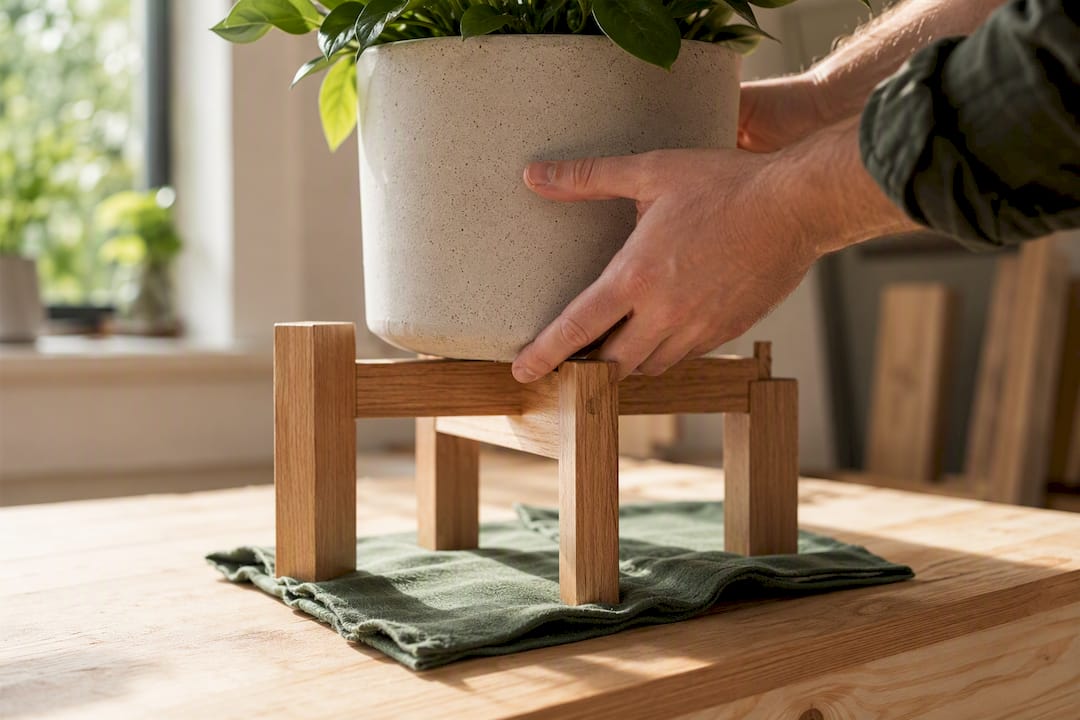
- Single-tier stool. Four pine legs, a circular top, wood glue and screws. Cut, sand, assemble, then seal with exterior varnish if it’s heading outside. Roughly two hours for a beginner.
- Three-leg mid-century stand. Hairpin legs (bought ready-made) attached to a round or hexagonal top. No complex joinery required, just accurate drilling for leg plates. About ninety minutes, plus drying time for any stain.
- Small multi-tier ladder. Two side rails with evenly spaced rungs or shelves. This one demands the most precision, since uneven rung heights make the whole structure wobble. Budget half a day, including sanding and two coats of sealant.
For every project, test the load before trusting it with a real plant: stand on the finished piece, or stack weights equivalent to your heaviest intended pot. Seal wood end-grain properly, and consider a powder-coat spray on any metal legs destined for outdoor use.
Pro Tip: Never skip the load test. A stand that looks solid can still flex under a genuinely heavy, wet pot, and that’s a mess you want to discover before it’s on your good rug.
Protecting floors, plants and yourself long term
A planter stand is only as good as the maintenance behind it, and most damage comes from ignoring small warning signs rather than sudden disaster.
- Use saucers, drip trays or silicone mats under every pot to stop water marking floors or carpets
- Fit rubber feet to any stand without them, particularly on hardwood or tiled flooring
- Reseal wooden stands annually if they’re outdoors, and touch up chipped powder-coat on metal before rust spreads
- Bring rattan and wicker stands indoors over winter, since damp fibres degrade quickly in cold, wet weather
- Check floor joist limits before placing very heavy concrete stands upstairs, particularly with large mature plants
Concrete looks tempting for permanence, but it’s genuinely unsuitable anywhere you might need to move it or where the floor structure can’t take sustained weight, a caution worth taking seriously in older properties with suspended timber floors.
Hanging planters carry their own risk. Fix hooks only into a ceiling joist using appropriately rated lag screws. Standard drywall anchors are not built for the sustained weight of wet soil and a mature plant, and they fail without warning, as safety guidance on hanging planters makes clear.
Why our advice on choosing planter stands holds up
Peter has spent years helping gardeners match the right furniture and hardware to real growing conditions, and the guidance here reflects what actually holds up in British homes and gardens, not just what looks good in a showroom.
There are retailers that stock a genuine range of planters, trays and outdoor furniture, back orders over a certain value with free delivery, and carry strong Trustpilot ratings. Building your own stand suits a weekend project and a tight budget. Buying from an established retailer suits anyone who wants a tested, weight-rated piece without the sanding.
— Peter
Ready to shop planter stands and accessories?
Once you know your material, height and weight requirements, buying the right piece takes minutes rather than another weekend of research. There are practical alternatives to building everything yourself: browse ready-made stands, trays and planters already sized for common pot dimensions, often with free delivery on orders over a certain value and easy returns if a piece doesn’t suit your space.

Start by measuring your pot and estimating its mature weight, then head to the main shop to filter by material and size. Add a drip tray while you’re there, since it saves a separate trip later and protects your flooring from day one. Next-day delivery options mean you could have the whole setup, stand, tray and planter, sorted relatively quickly.
Sources
For full cut lists, see the free DIY plant stand plans and curated stand roundups referenced above.
- 50 Best Plant Stands | The Strategist
- 15 Free DIY Plant Stand Plans
- A theatrical flourish: the best plant stands to display your plants
- Indoor plants stand: 2026 guide to choosing, styling, and building the perfect display - Moppmopp
FAQ
How much weight should a planter stand hold?
Aim for a stand rated to at least 1.5 times the mature weight of your pot, soil and plant combined, a margin designers widely recommend for anything holding heavy ceramic containers. A 30cm pot with damp soil and a mature plant can easily exceed 15kg, so check the manufacturer’s stated capacity rather than guessing.
Should I choose wood or metal for an outdoor planter stand?
Metal, particularly powder-coated steel, generally handles heavier pots more reliably outdoors than wood, provided the coating is genuinely rust-resistant. Solid hardwood works well too if you’re prepared to reseal it annually; either option beats MDF or untreated softwood in wet conditions.
What height difference looks best when grouping plant stands?
Vary neighbouring stand heights by roughly 4 to 8 inches to create a natural, tiered arrangement rather than a flat, uniform row. Odd-numbered groupings of three or five plants tend to look more considered than pairs or even sets.
Can I build my own planter stand safely?
Yes, simple designs like round-top stools or three-leg stands are achievable in an afternoon using freely available plans and cut lists. Always load-test the finished piece before adding a plant, and seal wood or powder-coat metal legs destined for outdoor use.
Are hanging planters safe on any ceiling fixing?
No, hanging planters need hooks fixed directly into a ceiling joist using properly rated lag screws. Standard drywall anchors cannot support the sustained weight of wet soil and a mature plant, and they can fail suddenly, as safety guidance confirms.
