



From £800: Choose Pergola or Gazebo for UK Gardens with RHS Advice
Posted by Amy Hall on 6th Sep 2026
From £800: Choose Pergola or Gazebo for UK Gardens with RHS Advice
If you want a solid roof and reliable shelter, a gazebo wins; if you want a lighter, plant-friendly frame that still feels open, a pergola is the better call. That single roof difference (open slats versus a solid cover) decides almost everything else, from rain protection to planning rules and price. Costs and local siting restrictions can still tip the decision either way, so it pays to check both before you commit.
TL;DR:
- Pergolas are lightweight and more affordable but offer limited rain protection without add-ons, making them suitable for shaded seating or plant support.
- Gazebos provide solid shelter from rain and weather but are bulkier and more expensive, ideal for year-round outdoor rooms or entertaining spaces.
- The main structural difference lies in the roof: pergolas have open slats for dappled shade, while gazebos have enclosed solid roofs for complete coverage.
- Material choices significantly impact maintenance costs; timber requires regular treatment, whereas aluminum and steel need minimal upkeep.
- Proper foundations and wind-rated structures are crucial, especially for gazebos with solid roofs, as wind uplift failure is a common issue.
Table of Contents
- Pergola vs gazebo: the quick comparison
- What actually separates a pergola from a gazebo?
- Pergola benefits and gazebo advantages: weighing the trade-offs
- How much do pergolas and gazebos cost in the UK?
- Do you need planning permission for a pergola or gazebo?
- How to choose between a pergola and a gazebo
- What do garden designers and the RHS say?
- Choosing furniture and covers for either structure
- Get your outdoor space ready, whichever you choose
- Sources
Pergola vs gazebo: the quick comparison
A pergola gives you dappled shade and an airy structure, but very little rain protection unless you add covers, canopies or louvred panels. A gazebo comes with a solid roof from the outset, so it shelters you from British drizzle without any extra kit.
Here’s the shortlist version:
- Roof and weather protection: pergolas have open or slatted roofs (partial shade, no proper rain cover); gazebos have solid roofs (full shelter, usable in most weather).
- Best for: pergolas suit dining areas, climbing plants and softening a patio’s edges; gazebos suit hot tubs, garden bars and year-round outdoor rooms.
- Visual impact and budget: pergolas tend to feel lighter and cost less at the entry level; gazebos look more substantial and usually cost more once you factor in the roof structure.
If your garden already has good shelter (a covered patio, a nearby conservatory) a pergola often does the job. If you’re building your only outdoor shelter from scratch, a gazebo tends to earn its keep faster.
What actually separates a pergola from a gazebo?
The defining structural difference comes down to the roof. A pergola’s slatted or louvred roof lets light and air through, casting broken shade rather than blocking the sun outright. A gazebo’s solid roof does the opposite: it blocks sun and rain completely, which is why it works as a genuine outdoor room rather than just a garden feature.
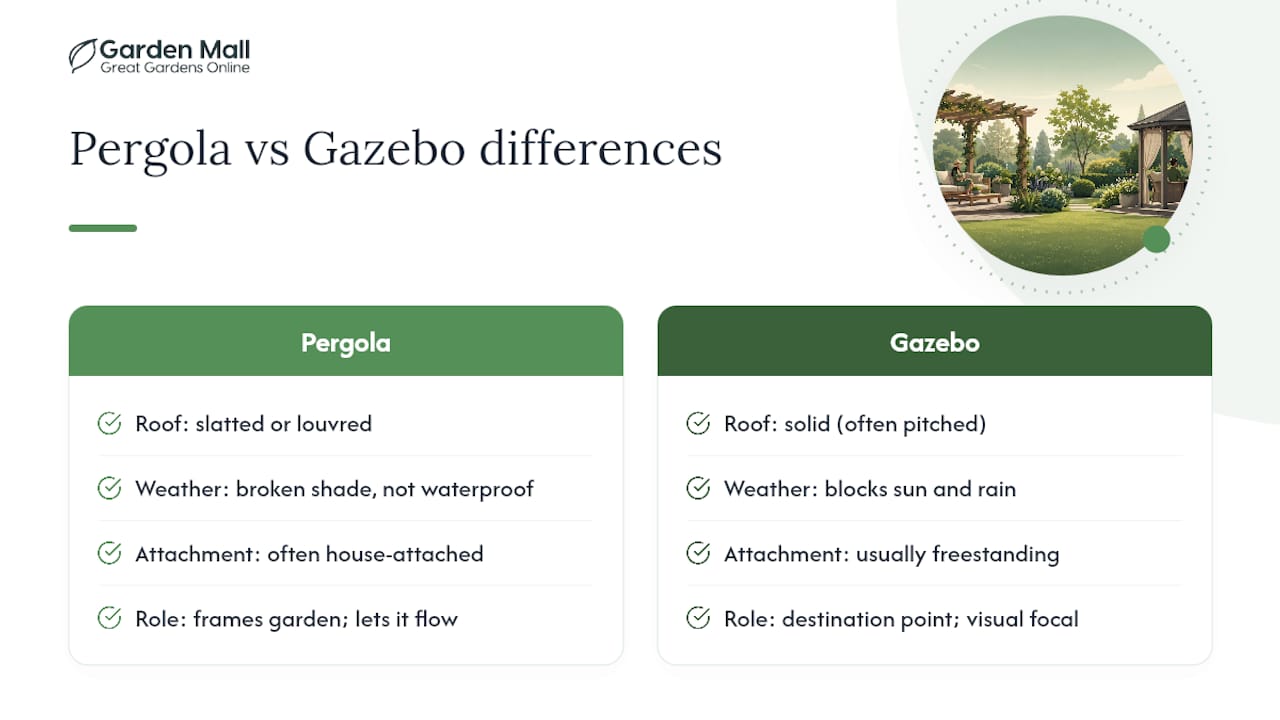
Attachment matters too. Gazebos are usually freestanding, so you can place them anywhere with a stable, level base and good drainage underneath. Pergolas often attach to the house, turning a patio into a covered extension of your living space, though freestanding pergola designs are just as common for framing a seating area mid-lawn.
Material choice changes the maintenance picture significantly. Timber needs regular treating and checking for rot; aluminium and powder-coated steel need almost none. Polycarbonate roof panels let light through but can discolour over time, while fabric canopies look softer but need replacing every few seasons. Some retractable or louvred pergolas can close up to behave like a gazebo when the weather turns, at a noticeably higher price than a fixed frame.
Shape and roofline also shift how a garden reads visually. A gazebo’s solid, often pitched roof draws the eye as a destination point. A pergola’s open frame lets the garden flow through it, which is why it tends to suit smaller plots better.
Pergola benefits and gazebo advantages: weighing the trade-offs
Pergola pros:
- Cheaper to buy and install, especially timber kit versions
- Supports climbing plants like wisteria, roses and clematis for a living roof
- Sits lightly in the garden without dominating the view
- Easier to DIY or install from a flat-pack kit
Pergola cons:
- Offers little genuine rain protection on its own
- May need added canopies, louvred panels or retractable covers for all-weather use
Gazebo pros:
- Shelters you reliably in rain, wind and strong sun
- Can function as a proper outdoor room, complete with furniture, lighting or even heating
- A solid roof and finished floor mean you can leave cushions out overnight without worrying about a sudden downpour
Gazebo cons:
- Costs considerably more, particularly for larger or permanent structures
- Dominates the garden visually, so scale matters more
- Often needs substantial foundations to resist wind uplift
Pro Tip: If you’re torn between the two, think about what you’ll actually do in the space. A morning coffee spot under climbing roses points to a pergola; a hot tub or a garden bar for entertaining points firmly to a gazebo.
How much do pergolas and gazebos cost in the UK?
Budget varies enormously by material and complexity, but the typical UK installed price bands give a useful starting point:
- Timber pergola: £800–£3,000
- Louvred aluminium pergola: £3,000–£12,000
- Timber gazebo: £1,500–£6,000, with premium versions running higher
The headline figure rarely tells the whole story. Budget separately for a proper base or foundation, outdoor-rated electrics if you want lighting or heating, flooring if the gazebo will double as a room, and windproof anchors if the roof is solid. If your garden already needs planning or building-regulations checks, factor in that time too.
Material choice affects lifetime cost as much as the upfront price. Timber looks warm but needs treating every year or two; aluminium and steel cost more initially but need almost no upkeep for a decade or longer.
Do you need planning permission for a pergola or gazebo?
Most garden structures fall under permitted development in the UK, but there are limits worth checking before you order anything. Structures within 2 metres of a boundary are commonly restricted to around 2.5 metres in height, and rules tighten further if you live in a conservation area or your property is listed.
Wind uplift is the risk most homeowners underestimate. A solid roof catches wind like a sail, so gazebos need proper foundations or ground anchors rather than just gravity and weight. When siting either structure, think about scale relative to the garden, privacy from neighbouring windows, and drainage. A structure sat in a low, boggy corner will cause problems no material choice can fix.
How to choose between a pergola and a gazebo
Work through this checklist before you buy:
- Test the use case first. Picture yourself using the space in January, not just in July.
- Measure the space properly, including clearance from boundaries and existing planting.
- Check planning and permitted development rules for your property and area.
- Set a materials budget, factoring in the full cost bands above rather than the cheapest headline price.
- Ask about foundations and electrics before you finalise anything.
When talking to suppliers, ask directly: what wind rating is the structure tested to? What warranty covers the roof and frame? What base or foundation does installation require? How is it actually installed, and by whom?
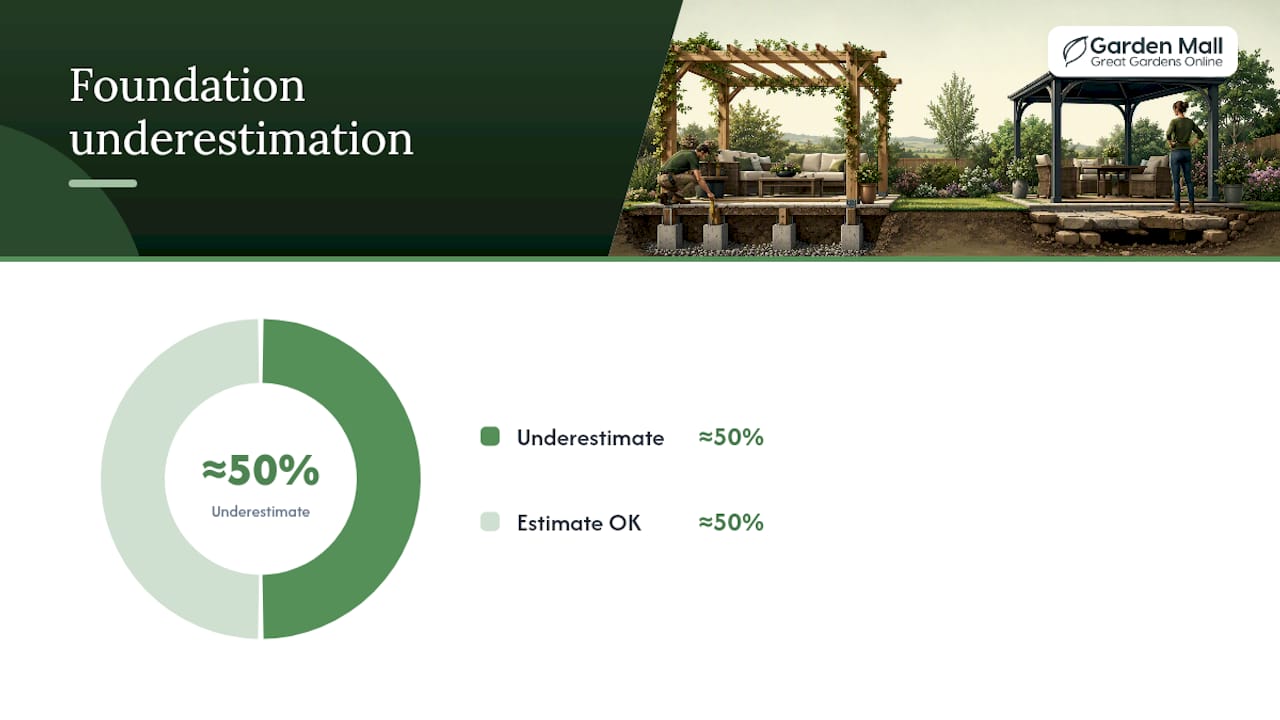
Roughly half of homeowners underestimate foundation requirements for solid-roofed structures, which is why wind uplift causes more garden-structure failures than almost anything else. Treat vague answers on foundations as a red flag, along with unclear warranties or a total absence of uplift fixings in the fitting instructions.
What do garden designers and the RHS say?
Designers frame the choice simply: a gazebo works as a destination, somewhere you walk to and sit in, while a pergola works better as a transition, linking house and garden or framing a path. The RHS recommends uprights of roughly 8x8cm for pergolas expected to carry mature climbers, since a thinner frame can buckle under the weight of wisteria or a heavy-flowering rose once established. Good drainage at the base matters just as much as the upright itself.
Choosing furniture and covers for either structure
Once you’ve settled on a structure, furnishing it properly makes the biggest difference to how much you use it. There are many covers, cushions, lighting and heaters suited to both open pergolas and enclosed gazebos, alongside wider furniture ranges that make either space worth sitting in. Pairing a pergola with the right furniture and lighting is part of what’s driving their current popularity, since a well-dressed frame can look every bit as finished as a fully roofed structure.
Get your outdoor space ready, whichever you choose
Great Gardens Online won’t fit your pergola or gazebo, but it’s the practical next step once the structure is up. Whether you’ve gone for an open timber frame or a solid-roofed outdoor room, you’ll need weatherproof cushions, ambient lighting and a heater to stretch the season into autumn evenings.
Furnishing a gazebo properly means thinking about a solid floor and finished feel, while a pergola benefits from softer textiles and hanging lights that play with the dappled shade coming through the slats. Great Gardens Online’s range covers both, with free delivery on orders over £70 and next-day delivery on many lines, so you’re not waiting weeks to enjoy the space you’ve just built. Browse the garden furniture and accessories collection to find covers, cushions and heating that suit your structure, and check current stock before the weather turns.
