



Fix Garden Furniture for Bad Backs with a £30–£50 Insert for UK Buyers
Posted by Amy Hall on 5th Sep 2026
Fix Garden Furniture for Bad Backs with a £30–£50 Insert for UK Buyers
The best garden furniture for bad backs combines a firm, contoured seat with proper lumbar support, a higher seat height and, ideally, some form of recline. High-back chairs, zero-gravity loungers, and firm-based seating with an orthopaedic insert all outperform soft, deep-cushioned sets. If your current furniture doesn’t fit that description, testing it before you buy and adding a supportive insert will get you most of the way there.
TL;DR:
- High-back chairs and zero-gravity loungers with firm, contoured support are most effective for reducing back strain and promoting proper posture outdoors.
- Seats should have a waist-level lumbar support, higher and firmer construction, and adjustable features like recline and leg elevation to accommodate different back issues.
- Testing furniture thoroughly by sitting for at least ten minutes, checking effort to stand, and verifying stability of recline mechanisms is essential before purchase.
- Adding orthopedic-supportive inserts or adjusting cushions can significantly improve the support of existing chairs without replacing them.
- Materials such as firm frames (hardwood or steel), slatted bases, and washable cushions enhance durability and ongoing support in outdoor conditions.
Table of Contents
- What to look for in supportive garden seating
- Best furniture types for bad backs: pros, cons and who they’re for
- How to adapt your current garden furniture for better back support
- Materials and construction that influence comfort and durability
- How to test furniture in store or at home — a short checklist
- How Great Gardens Online chooses supportive seating
- Finding the right supportive seating for your garden
- A publisher’s honest view on “ergonomic” garden furniture claims
- Sources
What to look for in supportive garden seating
Not every comfortable-looking chair is actually good for your spine. Deep, squashy cushions feel lovely for the first ten minutes, then let your pelvis sink backwards and flatten the lower back’s natural curve. That’s the opposite of what you want if you’re managing back pain.
Look for the following when you’re weighing up any piece of garden seating:
- Lumbar support that fills the small of your back, whether built into the chair’s frame or added afterwards with a contoured insert
- Seat height and firmness — a slightly higher, firmer seat makes standing up easier and keeps your pelvis in a neutral position rather than tipping you backwards
- Back height tall enough to support your shoulder blades and, in the best designs, your head and neck too
- Adjustability, including recline angles that lock securely and leg elevation for pressure relief
- Armrests that feel solid under load, with cushion fixings that won’t slide or blow away outdoors
Orthopaedic guidance tends to favour firm, structured support over soft cushioning, because a firm base stops the pelvis from sinking and pulling the spine out of alignment. That’s a very different priority from most garden furniture marketing, which sells “sink-in comfort” as the main selling point.
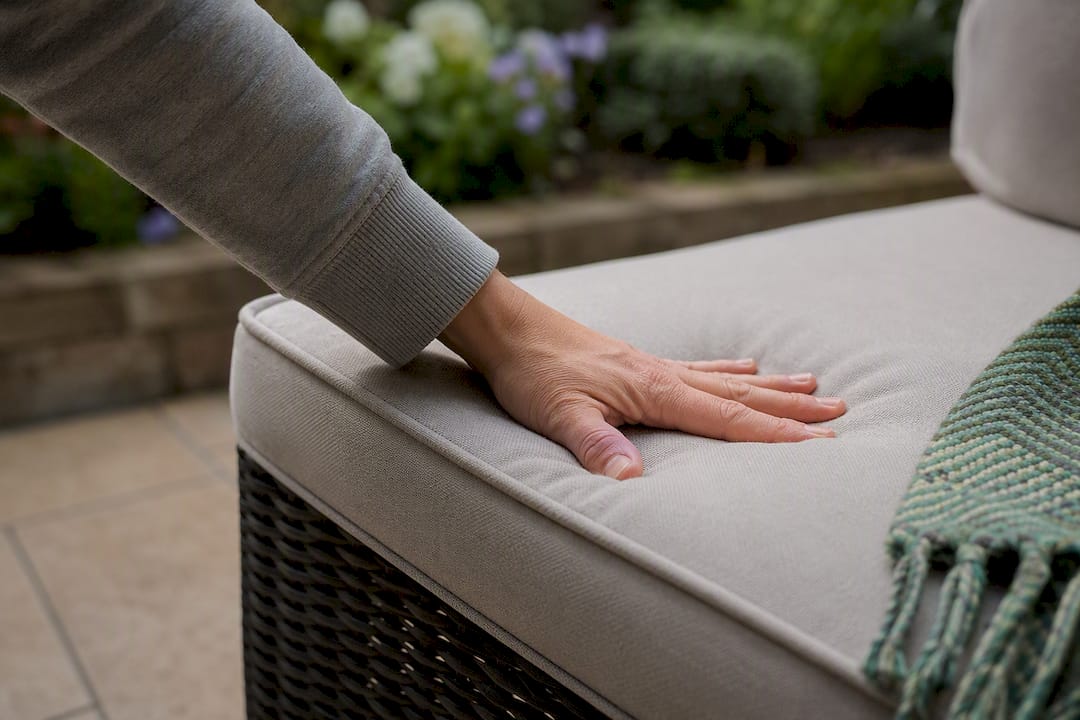
Pro Tip: When you’re comparing chairs, press your palm flat into the seat cushion. If your hand sinks past two or three centimetres before hitting resistance, that seat will likely let your hips do the same thing after twenty minutes.
Best furniture types for bad backs: pros, cons and who they’re for
Different back problems call for different chairs, and there’s no single “best” answer for everyone. Here’s how the main categories stack up.
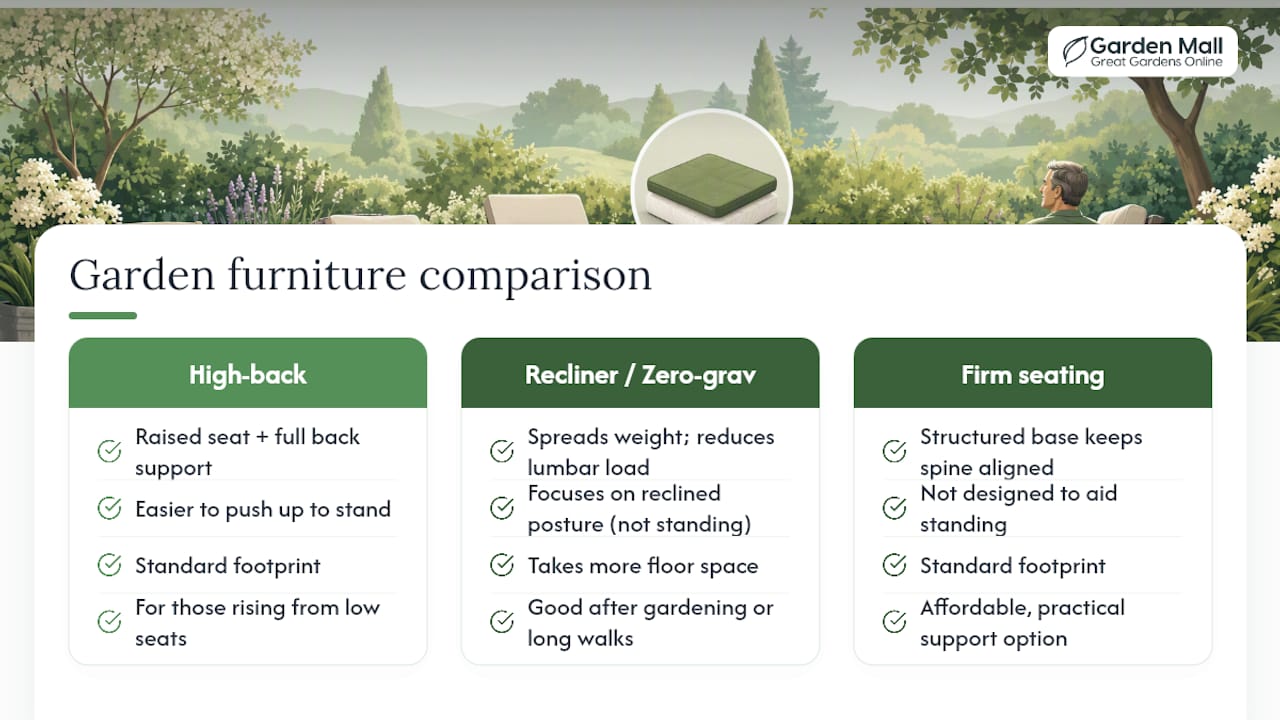
High-back chairs suit anyone who struggles to stand up from low seating or who feels neck strain after sitting outside for a while. A high-back garden chair typically pairs a raised seat with firmer armrests, both of which make pushing up to stand noticeably easier. Check the seat height against your own knee height before buying. If the chair sits too low, you lose that benefit entirely.
Recliners and zero-gravity loungers work by tilting your legs above heart level while spreading your weight across the backrest and footrest together, rather than concentrating it on your lower back. That redistribution reduces lumbar load and can genuinely help circulation, which is one reason these loungers are popular after gardening sessions or long walks. They take up more floor space and cost more than a standard chair, so they suit gardens with room to spare rather than tight balconies.
Firm, contoured seating without deep-fill cushions is the quiet workhorse of this list. A supportive sofa or bench with a structured base, topped with a moderate cushion rather than a thick one, keeps your spine aligned far better than anything marketed as “plush”. It’s less glamorous than a recliner, but it’s often the most affordable route to real support.
Portable ergonomic inserts offer a middle path if you’d rather not replace furniture at all. Products like the MEDesign Backfriend are contoured backrest and seat units designed by an orthopaedic consultant, built to sit inside almost any chair you already own. Similarly, ergonomic folding patio chairs with a built-in contoured seat give posture support while still folding away for storage.
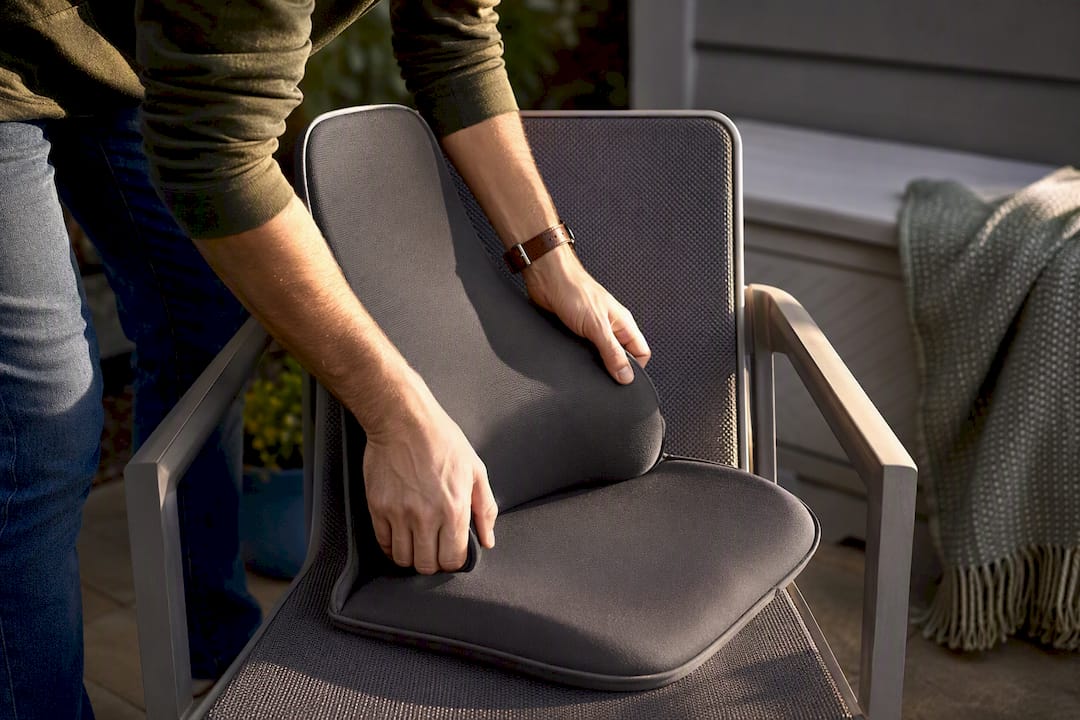
Weigh up trade-offs honestly: recliners need storage space and weather cover, firm seating sometimes looks less inviting in the showroom, and inserts add a step to setting up your seating each time. None of that outweighs the comfort difference for someone managing chronic back pain.
How to adapt your current garden furniture for better back support
You don’t necessarily need new furniture to fix a bad-back setup. Small, targeted changes often do the job.
- Position a lumbar insert correctly. Place the thickest part of the pad at the small of your back, roughly where your natural lower curve sits, not higher up against your shoulder blades.
- Layer your cushions with purpose. Use a firm base pad topped with a thinner, softer layer, rather than one deep cushion that lets your hips sink.
- Add a seat riser or firm base pad to lift chair height by a few centimetres. This single change makes standing up considerably less effort on knees and lower back alike.
- Secure everything against wind and rain. Ties, straps or Velcro fixings stop inserts sliding out of position exactly when you need them most.
- Bring cushions and inserts indoors overnight where practical, and check fastenings every few weeks. Damp foam loses its supportive structure fast.
Rotating a contoured lumbar pad also lets you fine-tune pressure distribution to your own spine, which is worth doing seasonally as your needs change.
Materials and construction that influence comfort and durability
Frame material affects more than looks. Aluminium frames are light and rust-resistant but can feel less stable under load unless well braced. Rattan (usually a resin weave over an alloy frame) flexes slightly, which some people find comfortable and others find unsupportive. Hardwood and steel frames tend to feel the most solid, useful if you need a firm base to push against when standing.
The seat base matters just as much as the frame:
- Webbing or strap bases flex more and suit lighter loads
- Slatted bases give firm, even support with good airflow
- Fixed-pan bases offer the most rigid support, ideal alongside a contoured cushion
For cushions, look for removable, washable covers. Non-removable covers trap moisture and degrade far faster outdoors, which quietly ruins the support you paid for within a season or two. Store cushions when not in use, wash covers regularly and check fastenings before each new season.
How to test furniture in store or at home — a short checklist
A thirty-second sit tells you almost nothing. Give any chair a proper trial before committing.
- Sit for a full ten minutes, not thirty seconds, and notice whether your pelvis stays neutral or starts sliding forward.
- Stand up and sit down several times to check how much effort it takes.
- Test every recline position and confirm the locking mechanism holds firmly under your weight.
- Record seat height, seat depth, back height and armrest height so you can compare models properly later.
- Ask about replaceable cushions, warranty terms and delivery handling, especially return policies if you’re buying online and testing at home.
Pro Tip: Watch your knees while seated. If your thighs slope downward rather than sitting roughly parallel to the ground, the seat is too low for your frame, whatever the cushion feels like.
Walk away from any chair where the pelvis tips forward on sitting, cushions flatten completely under light pressure, or the armrests wobble when you lean on them.
How Great Gardens Online chooses supportive seating
We consider factors such as firm seat structure, genuine lumbar support, and sensible seat height, not just how a chair photographs. Offering delivery options, returns, and prompt shipping can make trying furniture at home less risky. If you’re unsure which range suits your specific back issue, get in touch and we’ll talk it through with you.
Finding the right supportive seating for your garden
The recommended product categories include high-back ranges built for easier standing, reclining and zero-gravity loungers for pressure relief, and firm-seat sets that avoid deep-sink cushioning. Ideally, these come with removable, weatherproof cushion covers to maintain support over time.

Free delivery applies on orders over £70, with easy returns and next-day delivery options on many lines, which matters if you want to test a chair properly at home rather than guessing from a showroom sit. Browse the current garden furniture range and filter by seating type to find high-back, recliner or firm-seat options that match what your back actually needs this season.
A publisher’s honest view on “ergonomic” garden furniture claims
Most garden furniture marketing leans on comfort language that has nothing to do with spinal support. “Plush”, “sumptuous” and “deep-fill” all describe cushions that work against you if you have a bad back. That’s the gap worth understanding: what sells well in a showroom and what actually helps your spine are often opposite things.
The other habit worth breaking is assuming you need to replace furniture entirely. A £30 to £50 lumbar insert, correctly positioned, transforms a mediocre chair faster than any amount of shopping. Retailers rarely lead with that advice because it doesn’t move as much stock, but it’s the honest answer for anyone on a tighter budget.
Recliners get oversold too. They’re genuinely effective for pressure relief, but they’re not automatically better than a well-built firm chair for everyday sitting, and they demand more space and storage than most gardens comfortably allow. Match the furniture to how you actually use your garden, not to whichever option looks most impressive in a catalogue photo.
— Peter
