



3 Garden Furniture Care Habits to Extend Life in the UK, by Material
Posted by Amy Hall on 15th Sep 2026
3 Garden Furniture Care Habits to Extend Life in the UK, by Material

The single most reliable routine is this: wash every piece regularly with warm soapy water and a soft brush, check each material for its own specific weak point (silvering teak, chipped paint, rusting joints, grimy rattan weave), and cover or store furniture properly through the wetter months. Cushions need separate washing and reproofing once a year. Get those three habits right and most garden furniture will comfortably outlast its guarantee.
TL;DR:
- Regularly inspect and clean all furniture with warm soapy water and a soft brush to remove 90% of dirt, pollen, and grime.
- Oiling teak is purely cosmetic, and reapplication every two years preserves its golden hue, but it does not protect against weathering.
- Steel and cast iron require rust treatment and repainting when coating chips to prevent corrosion, while powder-coated aluminum needs minimal maintenance.
- Synthetic rattan is durable but traps dirt easily, requiring brushes and rinses, whereas natural rattan must be stored indoors to avoid water damage.
- Using breathable covers and storing cushions indoors reduces mold, mildew, and fabric deterioration, with annual deep cleans and quick repair checks to extend furniture life.
Table of Contents
- Material-specific garden furniture care: what actually works
- Cushions, upholstery and fabric care
- Protective measures and storage
- Repairs and spot fixes
- Your seasonal garden furniture maintenance schedule
- Getting set up: practical extras and where care advice comes from
- Why bother repairing when replacing feels easier?
- Where to buy garden furniture care essentials
- Sources
- FAQ
Material-specific garden furniture care: what actually works
Nine times out of ten, a bucket of warm water, a squeeze of washing-up liquid, and a soft-bristle brush will sort your furniture out. Scrub gently, working with the grain on wood and into the weave on rattan, then rinse and let everything dry in the shade rather than baking it in direct sun. That single method, backed by Garden UK’s cleaning guidance, handles roughly 90% of the dirt, pollen, and general grime your furniture picks up over a season.
Where it gets interesting is what happens after that basic wash, because every material has its own quirks.
Teak and other oily hardwoods
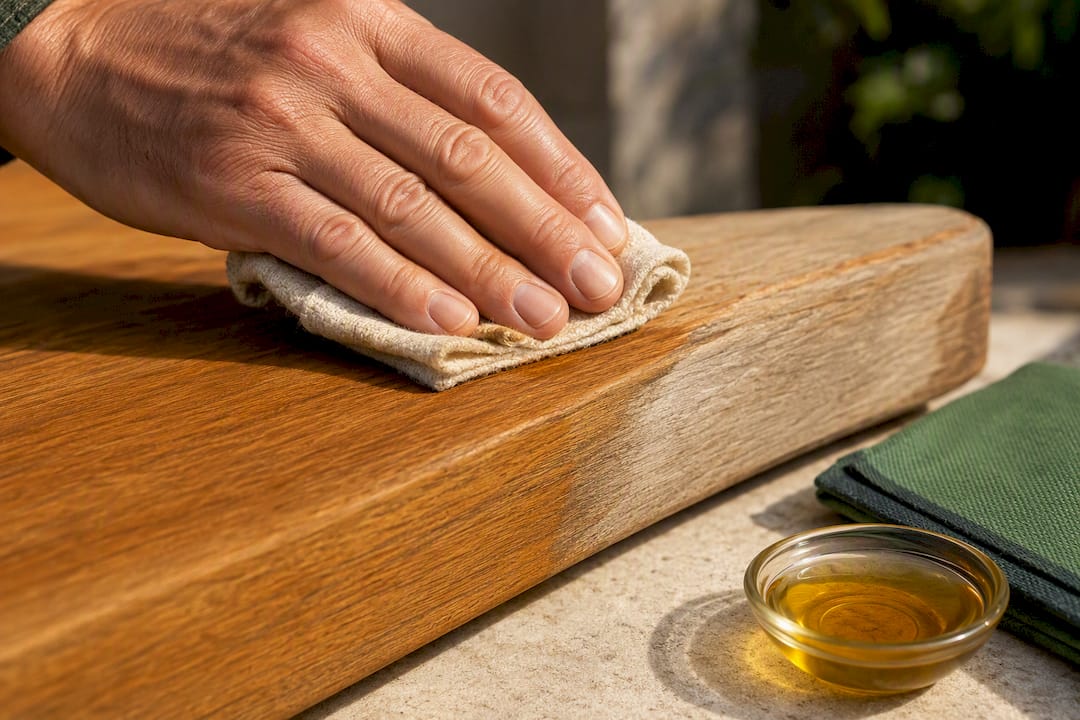
Teak is the material people worry about most, and honestly, most of that worry is unfounded. Left alone, teak weathers naturally to a soft silver-grey. That’s not decay. It’s the wood’s natural oils rising to the surface and reacting with UV light, and it does nothing to weaken the timber underneath.
Oiling teak is entirely cosmetic. It restores that honey-brown colour if you prefer it to the silvered look, but oiling doesn’t protect the wood from weathering, and skipping it changes nothing structural. If you do want to oil, use a proper teak oil, apply it after a thorough clean with a dedicated teak cleaner, and expect to reapply it around twice a year in a typically damp British climate if you want to hold onto that golden finish. Never pressure wash teak. The force can tear away the softer early wood grain and leave the surface pitted and rough.
Softwood and painted wood
Painted or stained softwood needs a different kind of attention because the finish, not the timber, is doing the protective work. Wash it the same way as teak, but keep an eye on the coating itself: flaking, chalky patches, or bare wood showing through are your cue to act, usually every one to two years depending on exposure. Reapply a woodstain or preservative in a dry spell, ideally spring or early autumn, and always on a clean, fully dry surface. Left unprotected, softwood absorbs moisture and starts to rot from the joints outward, which is far harder to fix than a fresh coat of stain.
Metal furniture: aluminium versus steel and cast iron
This is where the maintenance gap between materials really shows. Powder-coated aluminium is about as low-fuss as garden furniture gets. According to RHS advice on maintaining garden furniture, it won’t rust even if the coating gets scuffed, because aluminium simply doesn’t corrode the way steel does.
Steel and cast iron are a different story entirely. Once the paint or coating chips, exposed metal starts rusting quickly, and that rust spreads under the surrounding coating if you ignore it. The fix isn’t complicated:
- Sand the chipped area back to bare, sound metal.
- Wipe away dust and apply a rust converter to neutralise any corrosion already forming.
- Prime the bare patch, then finish with a matching metal paint.
- Check joints and welds twice a year, since plastic-coated metal can hide rust developing beneath cracked coating where you can’t see it.
Catching a rust spot the size of a coin now saves you a full respray in two years.
Synthetic and natural rattan
Synthetic rattan is tougher than it looks, but the woven pattern is brilliant at trapping dirt in places a cloth can’t reach. An old toothbrush dipped in soapy water gets right into the weave without damaging the fibres, and a gentle hose rinse finishes the job. Skip the pressure washer here too.
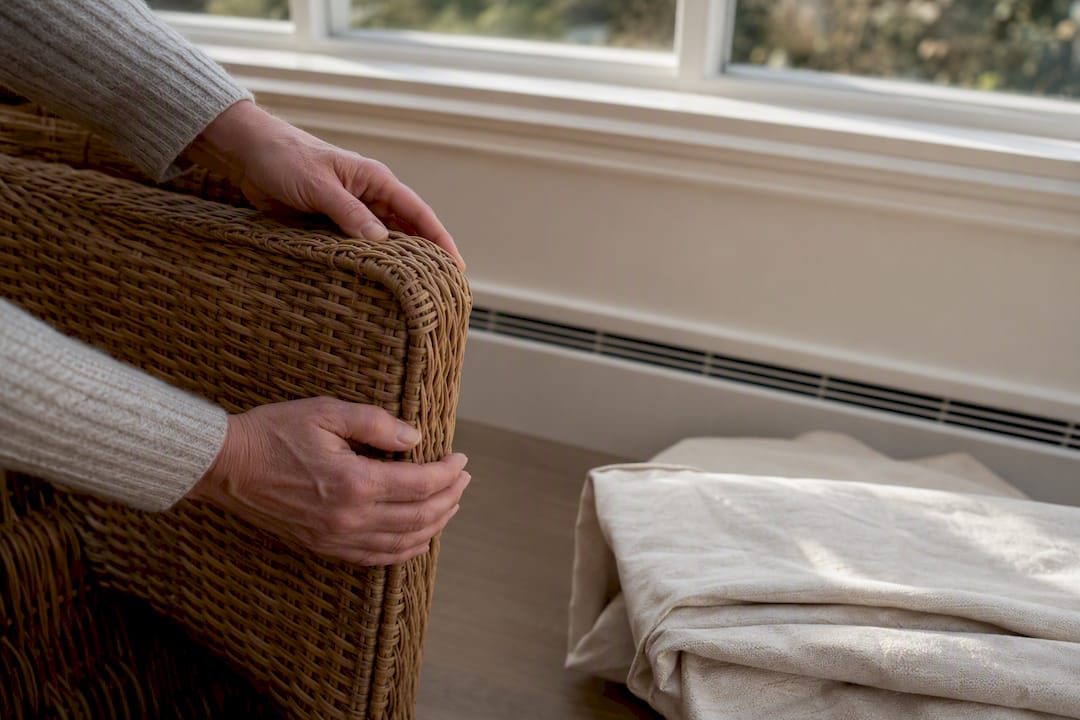
Natural rattan is far less forgiving. Never soak it, and never leave it out through a wet British winter, because the fibres absorb water and lose their strength. Bring natural rattan pieces indoors or into a shed once the weather turns, and treat it more like furniture than garden kit.
Plastic and resin
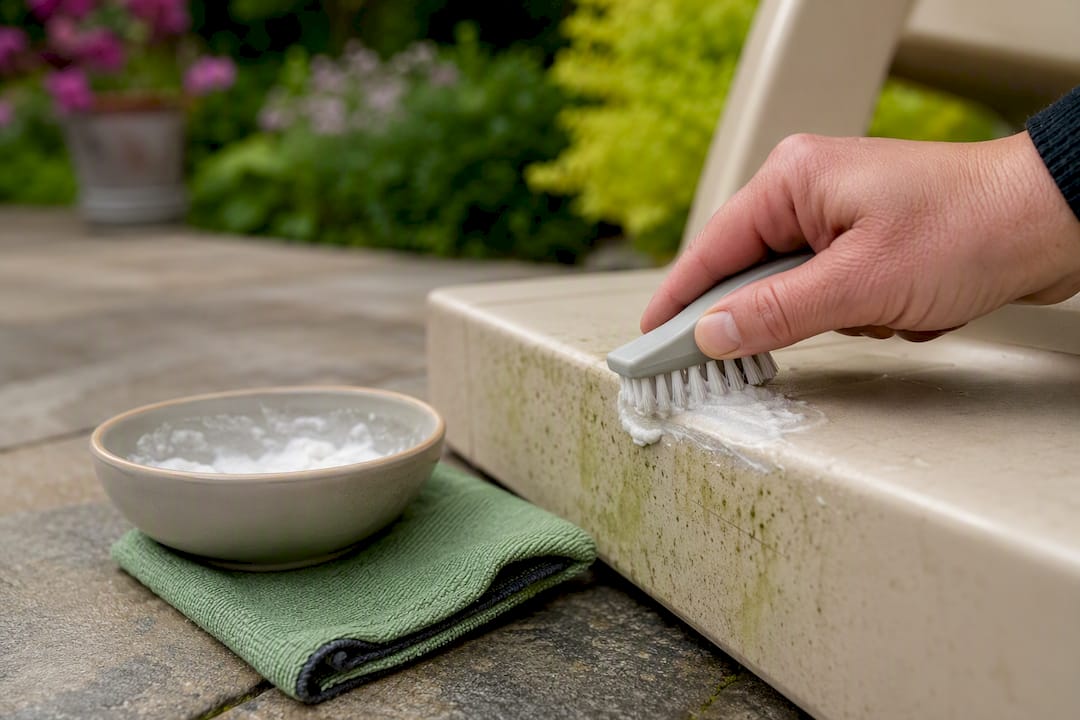
Plastic garden chairs and tables are the easiest material to keep looking decent, but stubborn scuffs and green algae marks need more than soapy water. A paste of bicarbonate of soda works well on ingrained stains, and a white vinegar solution at roughly one part vinegar to four parts water lifts algae and green film if you leave it on for about 15 minutes before scrubbing. Avoid bleach on light-coloured plastics, since it tends to yellow the resin over time rather than clean it.
A quick inspection habit worth building
Whatever the material, get into the habit of a quick once-over every time you clean:
- Look for chips or cracks in paint and coatings before they spread.
- Check screws, bolts, and fixings for any looseness.
- Confirm feet and legs aren’t sitting in standing water or on permanently damp ground.
Cushions, upholstery and fabric care
Cushion covers are usually the neglected part of the setup, yet they’re also the part most vulnerable to mould and mildew. Most covers machine-wash at 30°C, but always check the label first, wash them inside out, and let them air-dry fully rather than tumble drying, which can warp the foam pads inside.
- Unzip and remove covers, checking for any care symbols that flag hand-wash only.
- Wash covers at the recommended temperature, then hang them to dry completely before refitting.
- Wipe or gently wash inserts if they’re labelled washable; if foam feels crumbly or holds a musty smell no amount of drying shifts, it’s time to replace it.
- Once dry, spray the fabric with a suitable reproofer to restore water repellency, ideally once a year.
Mould and green algae on fabric respond well to a mild vinegar solution, similar to the ratio used on plastic. Sponge it on, leave for a few minutes, then rinse and dry thoroughly in the open air, since damp fabric left folded is exactly how mould gets a second chance.
Pro Tip: Store cushions in a dry, sealed box rather than a loose stack in the shed corner. A tight pile of soft fabric is prime real estate for mice looking for bedding, and a quick monthly airing check catches damp before it turns into mildew.
Protective measures and storage
A cover only earns its keep if air can move underneath it. Sealed plastic sheeting traps condensation against the surface, which encourages the very mould and rust you’re trying to prevent. Breathable covers with vents let moisture escape while still keeping rain and UV off, so look for a snug fit with adjustable straps or elastic hems that won’t flap loose in wind.
Where you can, indoor storage over a covered outdoor cover wins every time. A dry shed or garage keeps furniture fully out of the weather cycle, whereas even a good cover left outdoors all winter will eventually let some damp through at ground level. If indoor space is tight, prioritise cushions and anything wooden indoors, and leave metal and resin pieces outside under a breathable cover.
A few small positioning changes make a real difference too:
- Raise furniture feet off wet grass or paving using simple pot feet or bricks.
- Avoid parking furniture directly under trees, since dropped leaves and sap trap moisture against the surface.
- Use a parasol or shade sail on sunny days to slow UV fading, particularly on plastic and painted finishes.
Pro Tip: If you only have room to store one thing indoors this winter, make it the cushions. Fabric and foam degrade faster than any hard material on your furniture.
Repairs and spot fixes
Most damage is fixable if you catch it early, and catching it early is genuinely the whole game here.
- Rust spots on metal: wire-brush back to clean metal, apply a rust converter, then prime and finish with a matching metal paint, exactly as recommended for chipped powder-coated furniture.
- Chipped paint or powder coating: touch up small chips immediately with a matched touch-up paint; anything larger than a coin, or rust that’s already spread under the coating, usually needs a professional respray.
- Synthetic rattan strands: loose or snapped weave can often be re-wedged and secured with a weatherproof adhesive rather than replacing the whole panel.
- Plastic scratches and worn fasteners: light scratches buff out with a plastic polish; swap worn bolts or clips for standard hardware store replacements rather than binning the piece.
- Structural rot or deep corrosion: if a joint has gone soft with rot, or rust has eaten through a structural leg, repair isn’t safe. That’s a replacement, not a repair job.
Your seasonal garden furniture maintenance schedule
Little and often beats one big scramble every spring. Here’s the rhythm worth keeping:
- Early spring: inspect everything coming out of storage for damp, rust, or mould before it goes back into use.
- April to May: the first full clean of the year, plus any reoiling or restaining while the weather’s dry.
- Midsummer: a lighter wash to clear pollen and bird mess, and a check on cushion reproofing if it’s had heavy use.
- Early autumn: a deep clean before storage, tackling any chips or rust spots before they sit untouched all winter.
As a rule of thumb, plan for one proper deep clean and repair check per year, reproof fabric annually, and touch up metal finishes as soon as you spot damage rather than waiting for the next scheduled clean. Repair small corrosion or chips the moment you see them; if softwood shows deep, soft rot rather than surface weathering, replacement is the safer call.
Getting set up: practical extras and where care advice comes from
A handful of extras make this whole routine far easier: a breathable, vented cover sized to your set, a fabric reproofer spray for cushions, and a rust converter or matching touch-up paint for metal pieces. None of it is expensive, and having it to hand means you fix a problem the day you spot it rather than three weekends later.
If you’re stocking up, there are online retailers that offer free delivery on orders over a certain amount, straightforward returns, and high ratings on review platforms, so getting the right cover or cleaning kit without a big delivery wait can be straightforward.
Peter, who covers outdoor living and garden product care for Great Gardens Online, has spent years looking at how everyday households actually maintain their gardens rather than how manufacturers say they should.
Why bother repairing when replacing feels easier?
Most people replace furniture that a £10 tin of rust converter and an afternoon would have saved. That’s the real waste, not the furniture itself. A wooden set that gets one proper clean and reoil a year can run for well over a decade, while the same set left to rot at the joints might not survive three winters. Repair first. Replace only when the structure itself has genuinely failed.
— Peter
Where to buy garden furniture care essentials
Once you know the routine, the last piece is having the right kit on hand before you need it, not after a chip has turned to rust. Some online stores stock breathable covers sized for bistro sets and larger dining sets, fabric reproofing sprays, and furniture replacements for pieces that have genuinely reached the end of their life rather than just needing a repair.

Every order over £70 comes with free delivery, and returns are simple if a cover doesn’t fit quite right. Browse the garden furniture and accessories range to find a cover, reproofer, or replacement set that matches what your garden actually needs this season, and get it sorted before the next spell of wet weather sets in.
Sources
- Furniture: maintaining garden seats and tables | RHS Advice
- Clean & Protect Garden Furniture: UK Guide | Garden UK
FAQ
What is the best way to care for garden furniture?
Clean it regularly with warm soapy water and a soft brush, treat material-specific issues like rust or algae as they appear, and protect it with a breathable cover or indoor storage over winter.
Should you oil or varnish outdoor furniture?
For teak, oiling is optional and purely cosmetic since the wood weathers safely to silver-grey without it; for softwood, a preservative stain or varnish genuinely protects the timber and needs reapplying every one to two years.
How do I maintain my outdoor furniture?
Wash it regularly, inspect for chips, rust, or loose fixings each time, and store it properly (breathable cover or indoors) through wet and cold months to prevent long-term damage.
What is the best oil to use on wooden garden furniture?
A dedicated teak oil suits teak and similar oily hardwoods best, applied after cleaning with a proper teak cleaner, and reapplied roughly twice a year in a wet climate if you want to keep the honey colour rather than let it silver naturally.
