



Garden Arch Placement: 5 Quick Checks to Pick the Best Spot
Posted by Amy Hall on 21st Sep 2026
Garden Arch Placement: 5 Quick Checks to Pick the Best Spot
The best spots for a garden arch are at an entrance, along a path where it meets another zone, or as a standalone focal point that closes a view. Whichever role you choose, size the arch to your gate or path width first, and leave room for the climbers you plant to fill it out over a few seasons. Get those two things right and everything else, from anchoring to styling, tends to fall into place.
TL;DR:
- Select an arch size that provides at least 200cm clearance in height and 90cm width at the minimum, adding extra for vigorous climbers or wider pathways.
- Place arches strategically at entry points, transitions, or to frame long views, ensuring they serve a clear functional or aesthetic role.
- Anchor arches securely based on the underlying surface, with soil or lawn requiring sinking the legs directly, and paved areas needing bolt-down fittings.
- Choose site aspect and plants carefully, matching sun or shade preferences and wind tolerance to ensure healthy, sustained growth.
- For small gardens, opt for wall-mounted or narrow-frame arches that maximize space without sacrificing functionality or visual appeal.
Table of Contents
- Where should you place a garden arch? Choosing its role
- What size arch fits your space?
- Which aspect and climbers suit your arch site?
- How do you anchor a garden arch securely?
- How do you use an arch to frame views and paths?
- What are the best small garden arch options?
- How do you plant and maintain a garden arch?
- How Great Gardens Online thinks about garden structures
- Ready to plan your garden arch?
- Sources
- FAQ
Where should you place a garden arch? Choosing its role
Before you think about width, height or which clematis to plant, decide what job you want the arch to do. A garden arbor is a vertical structure built to be walked through, and that “walked through” part is the clue. It’s not a wall ornament. It’s a piece of architecture that changes how people move and look through your garden.
There are four roles that cover almost every situation:
- Entrance marker: at the front gate, side gate, or the point where a public path meets your private garden. This is the classic use, and it works because it announces arrival before anyone reaches the door.
- Path transition: where a lawn gives way to a vegetable plot, or a formal terrace meets a wilder border. The arch acts like a full stop and a new sentence at once.
- Focal point: positioned to close a long view, often at the end of a path with nothing beyond it but a bench, statue, or planting bed. Here it’s more picture frame than doorway.
- Garden-room divider: splitting one plot into two “rooms”, such as a dining terrace and a play lawn, so each feels separate despite sharing a boundary.
Small gardens usually do best with a single arch chosen for one clear job, typically the entrance or a divider, rather than trying to squeeze in a focal-point arch as well. Larger plots can support two or three arches used in sequence along a path, each reinforcing the sense of a journey rather than competing for attention. If you’re working with a straight run of lawn and nothing else, a mid-path transition arch will do more for the garden’s shape than one stuck awkwardly at the boundary.
What size arch fits your space?
Getting the scale wrong is the single most common arch mistake, and it usually happens because people buy first and measure second. Start with clearance, not aesthetics.
- Check passage width. Allow at least 90cm for one person walking comfortably, and closer to 120cm if you push a wheelbarrow, mower, or pram through regularly.
- Match height to use. A minimum of 200cm clearance keeps most adults from ducking, though 220cm feels more generous once climbers thicken the underside.
- Compare against known benchmarks. A typical freestanding metal arbor is listed with an overall height of around 85 inches and a width near 57.5 inches, which converts to roughly 216cm by 146cm. That’s a useful mental yardstick when you’re stood in the garden trying to picture scale.
- Do the stick-and-string test. Push two canes into the ground at your proposed uprights, then run string between them at your intended top height. Walk through it several times, at different times of day, before committing.
- Look back, not just forward. Stand on the far side and check the view returns something worth seeing, since an arch frames a sightline in both directions, not just the one you first imagined.
Pro Tip: Add 10 to 15cm of extra width and height to your minimum figures if you’re planting vigorous climbers like wisteria or rambling roses. Growth bulks out both sides of the frame within two or three years, and a snug arch becomes a genuinely tight squeeze.
Which aspect and climbers suit your arch site?
An arch lives or dies by what grows on it, so the site needs to suit the plant as much as the plant suits the site. Match aspect to the climber’s needs before you fall for a variety purely on looks.
- South or west-facing arches suit sun-loving climbers such as roses, clematis (the large-flowered types), and honeysuckle, all of which flower more freely with a full day’s light.
- North or east-facing, shadier spots work better for climbing hydrangea, some ivy varieties, or shade-tolerant clematis like Clematis montana, which tolerates cooler conditions without sulking.
- Exposed, windy sites need sturdier framing, since heavy, wet climber growth catches wind like a sail. A lightweight arch in an open, blustery garden is a maintenance headache waiting to happen.
- Sheltered courtyards allow more delicate or less wind-tolerant plants, including some jasmine varieties that would struggle in an open field-edge garden.
Think about the seasons too. An arch planted with evergreen or structural climbers such as ivy holds interest through winter, while one built around roses or sweet peas peaks hard in summer and looks bare from October onward. Many gardeners plant one fast, showy climber alongside one steady evergreen so the arch never looks entirely empty, whatever the month.
How do you anchor a garden arch securely?
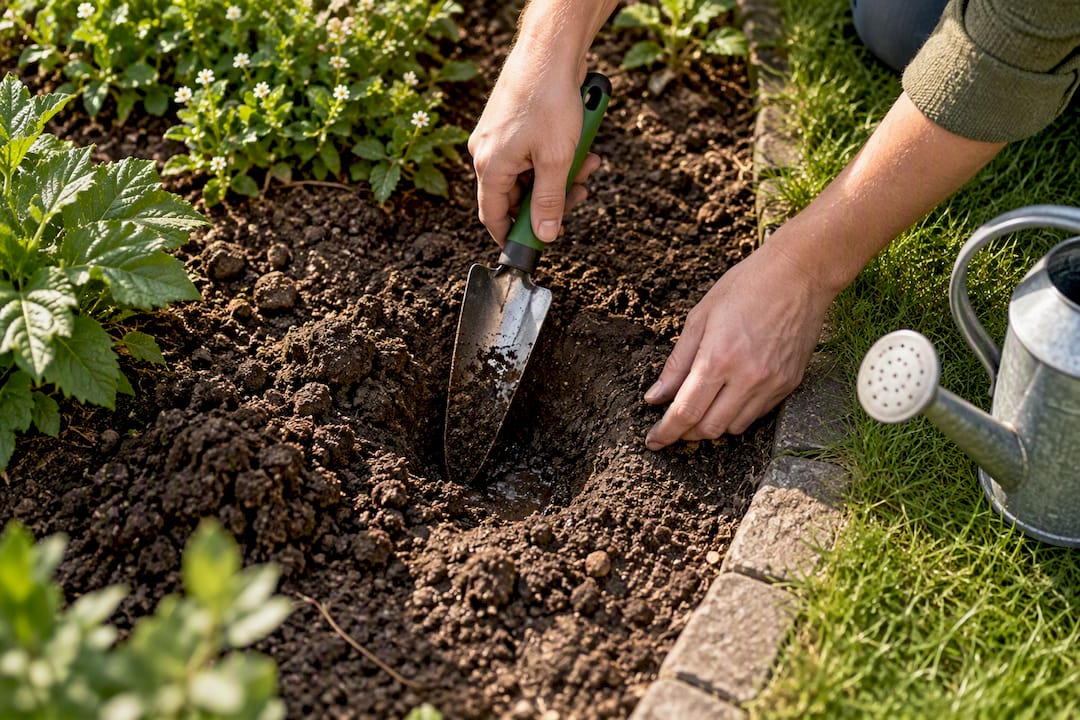
Anchoring depends entirely on what’s underneath the arch, and getting this wrong is why so many arches lean within a year. The right fixing method varies by surface: soil and lawn take a different approach to paving or decking.
- Soil or lawn: sink the arch’s legs directly into the ground to a sufficient depth for stability, and firm the soil back around them in layers rather than one dump.
- Paving or patio: use bolt-down feet designed for hard surfaces rather than trying to drive legs through concrete, since retrofitting a hole later is far harder than planning for one now.
- Loose, sandy, or very exposed ground: set the legs in concrete footings for real stability, especially if the site catches wind or the arch will carry a heavy climber like wisteria.
- Check level and square before anything sets. A spirit level and a helper make this a five-minute job rather than a return trip with a crowbar.
- Firm and water in if you’ve used soil anchoring, since settled, compacted ground resists movement far better than loosely backfilled holes.
You’ll need a post-hole digger or spade, a spirit level, a rubber mallet, and either quick-set postcrete or bolt-down fixings depending on the surface. Most freestanding arches on soil are a manageable weekend job for two people; anything involving concrete footings on a slope, or a heavy pergola-style structure, is worth handing to a landscaper.
Pro Tip: If you’re not sure whether your soil is stable enough for direct-sink legs, dig a test hole first. Ground that crumbles or fills with water within minutes needs concrete footings, not a hopeful bag of postcrete poured into loose earth.
How do you use an arch to frame views and paths?
An arch that simply sits in a garden, unconnected to anything either side, tends to look like an afterthought. One aligned to frame something, a bench, a distant tree, a garden gate, reads as deliberate even to visitors who couldn’t say why.
- Line the arch up so it frames a genuine feature on approach, and check the reverse view works too, since sightlines run both ways.
- Underplant with pots, low shrubs, or lavender either side to visually root the arch in the border rather than leaving its legs standing bare.
- Add low-level lighting, solar spike lights or a lantern on a post, so the frame still reads clearly after dusk.
- Space multiple arches along a long path at roughly 3 to 4 metre intervals, close enough to feel connected but not so close they blur into a tunnel.
Done well, this turns a single structure into a piece of garden architecture that guides the eye rather than simply interrupting it.
What are the best small garden arch options?
Limited space doesn’t rule out an arch. It just changes which type suits you. A full freestanding structure with deep footings on both sides isn’t always practical in a courtyard or narrow side passage, but a slimmer alternative usually is.
- Wall or fence-mounted arches fix directly to an existing boundary, giving you the vertical climbing frame without needing ground clearance on both sides.
- Narrow-frame arches work as accents rather than full walk-through structures, ideal for a spot beside a doorway or against a courtyard wall.
- Vertical accents over full arches suit compact plots where a through-route arch would simply eat into usable paving.
- Suitable plants for these tighter frames include clematis, jasmine, and climbing roses trained on a fan rather than allowed to sprawl, since a narrow, wall-mounted arch adds vertical interest without reducing usable space in a small courtyard or side path.
How do you plant and maintain a garden arch?
Once the arch is in and stable, the planting and upkeep decide whether it still looks good in five years. Plant climbers at the base once the structure is fixed, then train young stems up and across using soft ties rather than wire, which can cut into growing stems as they thicken.
- Tie in new growth every few weeks during the main growing season so stems climb the frame rather than flopping sideways.
- Prune roses and clematis after flowering, and thin congested growth each winter so wind can pass through rather than catching a solid mass of foliage.
- Check bolts, feet, and ground anchoring once a year, ideally in early spring before growth resumes, and tighten or re-set anything that has shifted over winter.
- Treat metal frames for rust spots and re-oil or re-stain timber arches every couple of years to stop weathering taking hold.
A vintage-style grow your own vegetables sign fixed near an allotment-style arch is a small styling touch that reinforces the entrance role without any extra planting effort.
Pro Tip: Heavy climbers like wisteria can add real weight once mature. If your arch feels at all flexible under hand pressure after a couple of seasons of growth, get the anchoring checked before autumn winds arrive.
How Great Gardens Online thinks about garden structures
We’ve spent years helping gardeners furnish outdoor spaces that need to work as hard as they look good, and arches are no exception. Our structures, planters, and garden decor ranges are selected with placement thinking in mind, with delivery and returns options available in case a size doesn’t suit your plot.
— Peter
Ready to plan your garden arch?
Once you’ve settled on role, scale, and site, the next step is sourcing pieces that fit the plan rather than fighting it. Great Gardens Online stocks the categories that actually solve arch placement problems: garden structures and landscaping pieces for the arch itself, outdoor pots and planters for underplanting and anchoring the frame visually, and garden decor for the finishing touches that make a new arch feel settled rather than freshly dropped in.

Before you order, measure your gap twice, check what your surface actually is (lawn, paving, or loose border soil), and pick fixings to match rather than assuming one type suits everywhere. If you’re planning a wider seating area around the arch too, our outdoor dining range and training ties and accessories under gardening cover most of what you’ll need in one order. Free delivery is available on certain orders, and next-day delivery options may be offered for urgent planting deadlines. Browse the full range at Great Gardens Online and start with the structure, then build outward from there.
Sources
- Arbor | garden shelter | Britannica
- Garden archway: why and how | Build & Renovate
- Eden Park Arbor product page | H Potter
FAQ
What are the three golden rules of garden design?
Most designers agree on scale, unity, and balance: elements should relate to human proportion, feel connected to the rest of the garden, and avoid overcrowding one area while leaving another bare. Applied to an arch, that means sizing it to the path it sits on, aligning it with sightlines rather than dropping it at random, and giving it room to grow into rather than out of.
How high should a garden arch be?
Most arches work well with a minimum clearance of around 200cm, rising to 220cm or more once you account for climber growth thickening the underside. A commonly referenced product benchmark sits at roughly 216cm high and 146cm wide, which gives a practical mid-range target for most domestic gardens.
Do garden arches need foundations?
It depends on the surface. Soil and lawn require sinking the legs directly into the ground and firming in, while paving needs bolt-down feet and very loose or exposed ground benefits from concrete footings for real stability.
Do you need planning permission for a garden arch?
A standard freestanding garden arch almost never needs planning permission in the UK, since it’s a small, temporary-style garden structure rather than a building. If you’re near a boundary with a neighbour, attaching to a shared fence, or building something unusually large or permanent, it’s worth a quick check with your local council before you fix anything in place.
Where’s the best spot for an arch over a path?
The best spot is where the path genuinely changes character, such as the boundary between lawn and vegetable beds, or right at a gate where the transition from public to private space naturally happens. Check the view from both directions before fixing anything, since a well-placed arch frames something worth seeing on the way in and on the way back out.
