



30+ UK Front Door Planter Ideas You Can Keep Looking Great All Year
Posted by Amy Hall on 3rd Sep 2026
30+ UK Front Door Planter Ideas You Can Keep Looking Great All Year
The easiest route to a striking front door display is a matched pair of knee-high planters, each planted in a thriller-filler-spiller mix chosen for your actual light levels. Scale and drainage decide whether it thrives or sulks. Pots, saucers and soil are available to get you started this weekend.
TL;DR:
- Choosing the right planter size and material is crucial for stability, plant health, and longevity, especially in frost-prone areas.
- Match plant choices and placement to your porch’s actual light conditions, with specific options for sun, shade, and partial shade.
- Seasonal maintenance, such as watering, feeding, and overwintering, should be planned as a year-round process to keep planters attractive.
- Upcycled planters can be effective and budget-friendly options if properly drilled, lined, and weatherproofed.
- Ensuring clear access and safety around planters prevents obstacles and damage, especially on steps and narrow porch spaces.
Table of Contents
- 30+ front door planter ideas to steal for your own doorstep
- How to choose the right planter for your front door
- Choosing plants by how much light your doorway gets
- A season-by-season plan for watering, feeding and wintering
- DIY and upcycled planter ideas for tight budgets
- Simple styling rules for a genuinely welcoming entrance
- Why trust this front door planter guide
- Where to place your planters safely by the door
- Caring for plants in a front door microclimate
- A styling takeaway worth trying this weekend
- Where to buy planters and accessories for your front door
- Sources
30+ front door planter ideas to steal for your own doorstep
Every idea below names a planting combo, tells you the light it needs, and flags how much upkeep to expect. Pick one that matches your porch orientation rather than the prettiest photo, and it will still look good in October.
Matched pairs and symmetrical statements
- Boxwood topiary pair. Two clipped boxwood balls in matching cast stone urns either side of the door. Full sun to part shade, minimal watering, trim twice a year. This is the lowest-fuss high-impact option going.
- Bay tree standards. Trained bay trees in tall square planters give height without bulk. They tolerate wind well, making them a smart pick for exposed porches.
- Skimmia and euonymus duo. Both are evergreen, shade-tolerant and hold their colour through winter, according to Landscaping.
- Geranium and trailing ivy pair. Bright red geraniums as the filler, variegated ivy spilling over the rim. Needs six hours of sun and weekly deadheading.
- Lavender standards. A single lavender “lollipop” per pot, underplanted with silver-leaved dichondra. Sunny spots only; lavender rots in shade.
Single statement pieces
- Oversized urn, off-centre. One large glazed urn placed to one side of the door, planted with a dramatic phormium (thriller), calibrachoa (filler) and creeping jenny (spiller). Works best on asymmetrical porches.
- Sculptural grass planter. A single feather grass or miscanthus in a slim cylinder pot. Sways in wind rather than fighting it, so it suits exposed, breezy doorways.
- Trained olive tree. One olive standard in a heavy terracotta pot for a Mediterranean look. Needs full sun and a sheltered spot in hard frost.
Clustered groupings
- Three-pot staircase. Graduated pot sizes stepped up like stairs, unified by one plant palette (salvia, verbena, trailing lobelia). Repetition of colour, not pot shape, ties it together.
- Herb cluster. Rosemary, thyme and sage in terracotta pots grouped by the door. Practical, drought-tolerant and fragrant when brushed past.
- Succulent trio. Three low bowls of hardy sedum and sempervivum for a sunny, low-water porch. Barely needs watering through summer.
Seasonal theme ideas
- Spring bulb burst. Tulips and daffodils as thrillers, primroses as filler, trailing ivy as spiller. Swap out once blooms fade in late spring.
- Autumn mum display. Chrysanthemums in burnt orange and rust tones with ornamental kale beneath. Handles the first frosts without complaint.
- Winter evergreen and berry pot. Skimmia berries, trailing ivy and a few painted twigs for structure through the darkest months.
- Halloween and harvest pot. Ornamental gourds, kale and dried grasses for a short seasonal swap that needs no watering at all.
Window boxes and railing solutions
- Railing-mounted trough. A long trough clipped to porch railings, planted with trailing petunias and dusty miller. Ideal where floor space is tight.
- Twin window boxes flanking the door. Matching troughs either side, planted identically for symmetry. Works on cottages and terraces alike.
- Hanging basket paired with floor pots. A basket above the door echoes the colour of the pots below, creating a layered look from porch floor to lintel.
Low-water and shaded options
- Fern and hellebore shade mix. Ferns for texture, hellebores for winter flowers, both happy in under three hours of light.
- Begonia and heuchera combo. Begonias bring colour, heuchera brings foliage interest, both tolerate dappled shade well.
- Faux preserved boxwood pot. A genuinely useful option for north-facing doors where nothing thrives; modern faux preserved arrangements now look convincing up close, which solves the light problem outright rather than fighting it.
- Dry shade grass and hosta pairing. Hostas for bold leaves, ornamental sedge for movement, both tolerant of low light and infrequent watering.
Colour-led and design-forward ideas
- Monochrome white scheme. White geraniums, white petunias and silver foliage for a crisp, gallery-like entrance.
- Tonal blues. Salvia, lobelia and dusty miller in graduated blue and silver tones against a navy door.
- Contrast pot and door. A terracotta pot against a sage green door, or a black pot against a white one, for instant visual punch.
Practical and repurposed ideas
- Galvanised bucket planter. A lined and drilled metal bucket filled with trailing nasturtiums. Cheap, weatherproof, and surprisingly stylish.
- Painted tyre planter. A single old tyre, painted and lined, planted with hardy sedums for a rustic, low-cost look.
- Vintage stone trough. A reclaimed trough filled with alpine plants for a cottage-garden feel that needs almost no feeding.
- Wooden crate planters. Weatherproofed crates lined with landscape fabric, planted with cheerful annuals for a cost-effective seasonal refresh.
- Built-in porch bed. For homes with existing masonry planters flanking the step, treat them as oversized pots and follow the same thriller-filler-spiller logic.
Whichever idea you pick, the plant combination matters less than matching it to your actual light and effort budget, covered next.
How to choose the right planter for your front door
Get the size wrong and even the best plant combo looks apologetic. A widely used guideline puts planter height at roughly one third of your door’s height, or knee-high when you’re using a matched flanking pair, according to A Nest With A Yard’s sizing guidance. Wide entrances need bigger or multiple containers to register from the pavement; a single small pot by a grand front door reads as an afterthought rather than a deliberate choice, per the same source’s guidance on container scale.
Material choice affects both looks and lifespan.
- Terracotta breathes well, suits Mediterranean plants like rosemary and lavender, but cracks in hard frost unless it’s frost-rated.
- Resin and fibreglass are light enough to move solo, hold moisture better, and now come in finishes that mimic stone or lead convincingly.
- Cast stone looks substantial and ages beautifully, but a large filled pot can weigh over 30kg, so plan its final position before filling it.
- Glazed ceramic brings colour and shine but needs the same frost checks as terracotta.
Drainage is non-negotiable. Check for at least one hole of a reasonable size, and raise the pot slightly on feet or bricks so water can escape freely rather than pooling underneath. For frost-prone spots, choose pots explicitly marked frost-resistant, or move vulnerable terracotta into a porch or garage over the coldest weeks.
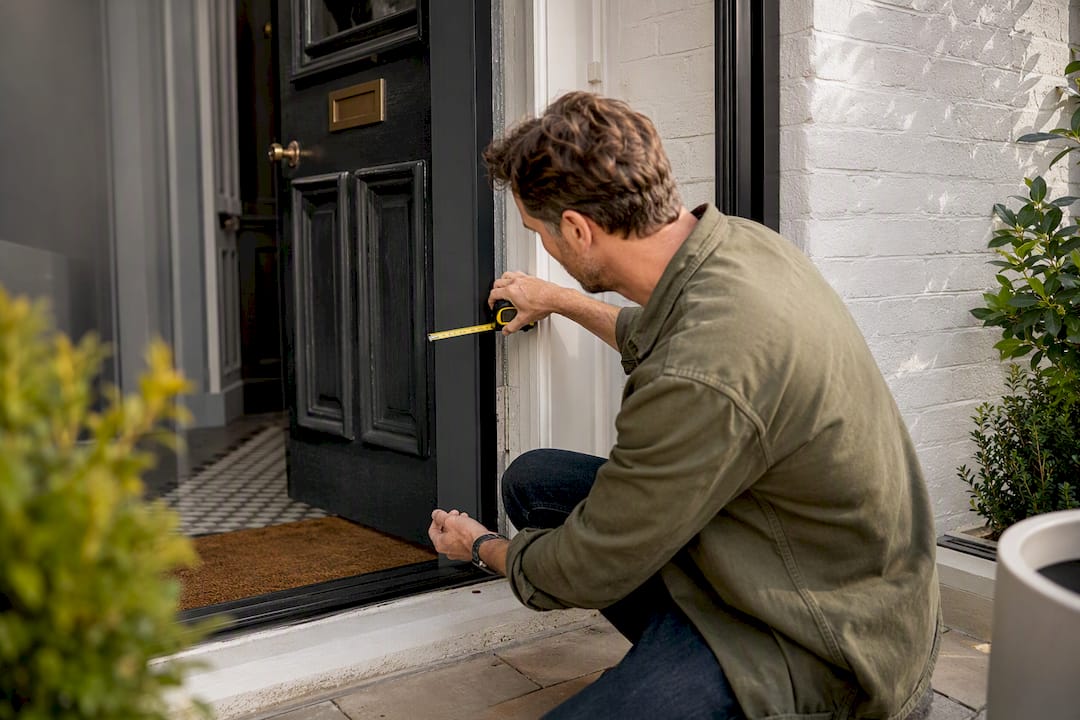
Before buying anything, measure your door height, note how many hours of direct sun the spot gets, and check there’s still room to open the door fully once pots are in place.
Pro Tip: Fill heavy stone or cast pots with a layer of broken polystyrene or upturned plastic plant pots at the base before adding compost. It cuts weight significantly and still drains perfectly.
Choosing plants by how much light your doorway gets
Match plants to your porch’s actual light hours, not what you wish it got, and everything else about the display gets easier.
Sunny doorways (6+ hours direct light)
- Geraniums and salvias as reliable, long-flowering thrillers or fillers.
- Rosemary or lavender for scent and structure.
- Ornamental grasses for movement in a breeze.
- Lantana or drought-tolerant succulents where summers run hot and dry.
The RHS’s guidance on summer container planting backs this pairing of sun-loving species for the brightest spots, and reserves foliage-heavy plants for shadier positions instead.
Part-sun doorways (3 to 6 hours)
- Lavender paired with calibrachoa and dusty miller gives a soft, silvery look that copes with inconsistent light.
- Mixed perennial and annual combos, such as heuchera with trailing verbena, hold interest longer than annuals alone.
Shaded doorways (under 3 hours)
- Ferns, begonias, hellebores and hostas form a reliable foliage-first palette for north-facing porches.
- High-quality faux preserved arrangements are a genuinely practical alternative here. Roughly a third of UK porches face shade or irregular care patterns strong enough to defeat real plants, and faux preserved options solve both problems at once, per A Nest With A Yard’s assessment of faux alternatives.
For overwintering, tender plants like begonias should come indoors before the first frost; hardy evergreens such as skimmia and hellebores can stay put year-round with a mulch layer for insulation.
A season-by-season plan for watering, feeding and wintering
Front door planters look their best when you treat them as a rolling four-season project rather than a one-off planting job.
- Spring. Refresh the top few centimetres of compost, plant early bulbs or pansies, and start light feeding once new growth appears. Stake anything tall and top-heavy before wind takes it down.
- Summer. Water most days in hot spells since pots dry out faster than garden beds. Deadhead spent flowers weekly to keep plants blooming, and check the undersides of leaves for aphids or slugs.
- Autumn. Swap tired summer annuals for chrysanthemums and ornamental kale, both of which shrug off the first frosts. Ease off feeding as growth slows.
- Winter. Protect roots with a mulch layer or by wrapping pots in fleece, lean on evergreen anchors like skimmia or boxwood, and add cut branches or a few solar lights for cheer when nothing is flowering.
Rotating annuals three times a year around a single evergreen anchor keeps the display coherent without a full replant each season, a strategy Blooming Expert’s seasonal planter advice recommends specifically for low-fuss upkeep. That permanent structural plant also protects your investment: it’s the one thing in the pot that never needs replacing, which keeps the whole display looking stable even mid-swap.
Pro Tip: Feed with a diluted liquid fertiliser every two weeks through summer rather than relying on slow-release granules alone. Pots leach nutrients fast every time you water.
DIY and upcycled planter ideas for tight budgets
Not every front door planter needs to come from a garden centre. Painted tyres, galvanised buckets and reclaimed crocks all perform well by the door once you sort drainage properly, and outlets like HGTV’s guide to oversized DIY planters walk through builds that hold up outdoors for years.
The rules for making an upcycled piece work are simple:
- Drill drainage holes before you plant anything. A pretty pot with no way for water to escape will rot roots within weeks.
- Line porous or rough containers with landscape fabric or a plastic liner to protect both the plant and the container’s finish.
- Weatherproof the outside with exterior paint or sealant if the material wasn’t designed for permanent outdoor use.
- Check weight and stability once filled, especially for anything top-heavy like a tyre or crate near a step people walk past.
Choose an upcycled piece when you want character on a budget or need something quirky for an odd-shaped nook. Choose a purpose-made pot when the front door is your home’s main visual statement and needs to look considered rather than resourceful. Both can sit side by side happily; a smart trick is pairing one polished statement pot with a rustic upcycled piece slightly behind it for depth.
Simple styling rules for a genuinely welcoming entrance
Symmetry suits formal front doors with a centred path and evenly spaced windows either side. A single off-centre statement piece suits asymmetrical porches, narrow steps, or doors set to one side of the facade, where a matched pair would look forced.
Pick a colour approach before you buy a single plant:
- Dominant colour repeats one strong shade (all reds, all whites) for maximum visual punch from the street.
- Contrast pairs a pot or plant colour directly against the door (a terracotta pot against a teal door) for instant impact.
- Tonal blends several shades of the same colour family for a softer, more considered look.
The thriller-filler-spiller structure, a bold upright plant for height, a bushier mid-layer for volume, and a trailing plant to soften the rim, gives every pot visual logic on its own, and Fine Gardening’s guide to entryway container design notes that repeating the same pot style or plant across multiple containers is what makes grouped displays read as one considered scheme rather than a scatter of unrelated pots.
Why trust this front door planter guide
Every planting combo above comes from established horticultural guidance, including the RHS’s seasonal container advice and design principles drawn from Fine Gardening’s container design guides, cross-checked against real-world sizing and styling advice rather than decorative trends alone.
Planters, stands, liners and accessories referenced throughout this guide are available, with some online retailers offering customer ratings on review platforms and delivery options. This piece was written by Peter, whose editorial perspective closes out the guide below.
Where to place your planters safely by the door
Front door planters need to earn their spot without becoming an obstacle. Leave enough clearance for the door to swing fully open without catching a pot or a trailing plant, and check this before you commit to a final position, not after the pots are full and heavy.
Keep the main walking path at least a metre wide between paired planters, and more where wheelchairs, pushchairs or delivery trolleys need to pass. Anything narrower turns a nice display into a daily obstacle course.
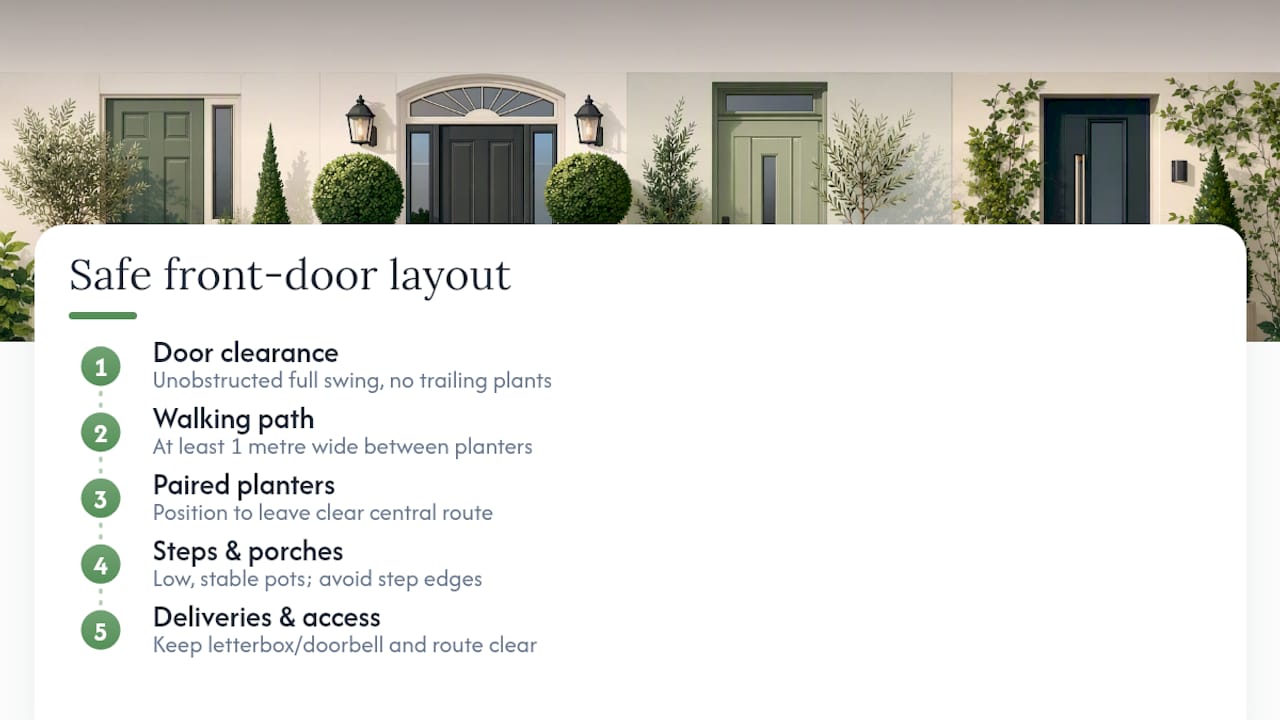
Steps and porches need particular care. Avoid placing pots directly on step edges where they could be knocked or tripped over in low light, and choose low, stable containers rather than tall top-heavy ones near the top or bottom step. If you’re using hanging baskets above the door, hang them high enough that nobody catches their head, and check the bracket can bear the weight once the compost is wet.
Postal deliveries matter too. Leave clear access to the letterbox and doorbell, and avoid trailing plants that drape across the path where a delivery driver might brush past them daily. A planter that looks lovely but forces visitors to sidestep around it undermines the very kerb appeal it was meant to create.
Caring for plants in a front door microclimate
The space right by your front door often behaves nothing like the rest of your garden. Covered porches create rain shadow, meaning pots under an overhang can dry out even during a wet week, so check soil moisture by hand rather than assuming rainfall has done the watering for you.
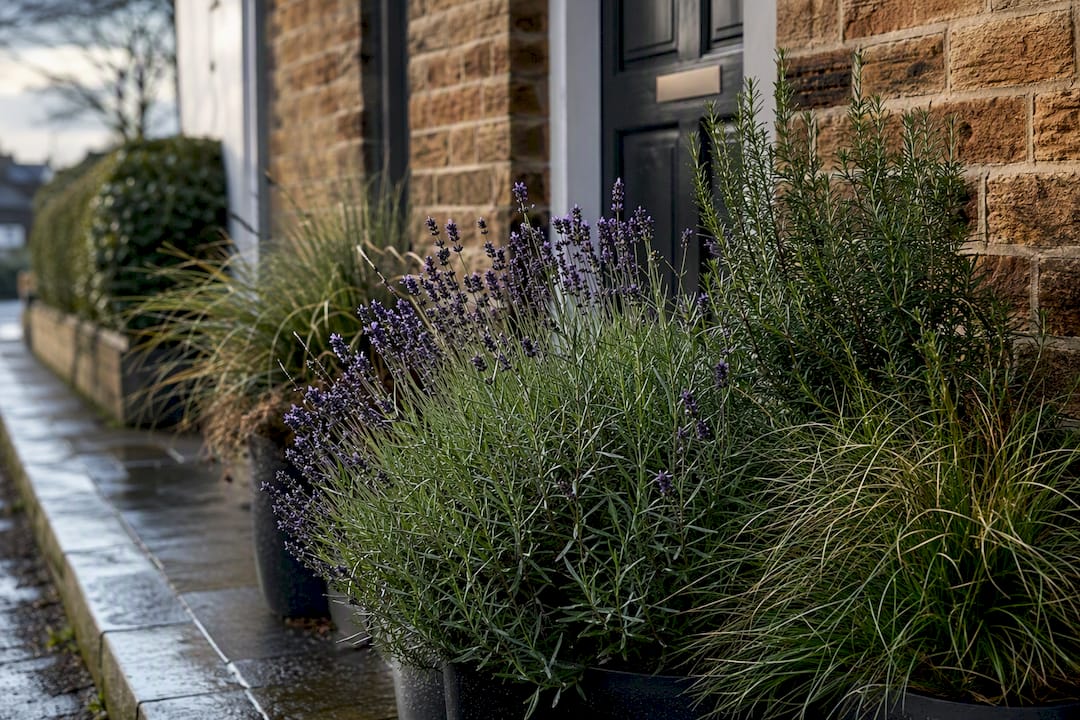
Wind funnels around corners and porch columns more than most people expect, drying compost fast and stressing tall, top-heavy plants. Ornamental grasses and other flexible-stemmed plants cope far better here than rigid upright thrillers, which may need staking or a heavier pot for ballast.
If your front door faces a road that gets gritted or salted in winter, salt spray and splashback can scorch foliage and build up in the soil over a season. Rinse leaves occasionally after gritting, and consider salt-tolerant species like lavender, rosemary and many coastal grasses for doors close to the kerb.
South and west-facing doors often run hotter than the rest of the garden thanks to reflected heat off paving and brick, which pushes up watering needs in summer. North and east-facing entrances stay cooler and shadier for longer, which is exactly where the shade-loving combos and faux preserved options earn their keep.
A styling takeaway worth trying this weekend
If there’s one thing worth testing before anything else, it’s standing at your kerb and looking back at your own door. Most people plant first and measure never, then wonder why the pots look small or the colours clash with the brickwork. Sort your light hours and your scale before you buy a single plant, and the rest of the styling decisions get much easier.
— Peter
Where to buy planters and accessories for your front door
Once you’ve settled on a combo, there are online stores where you can gather the pieces without hunting across several shops. The range typically covers planters in terracotta, resin and cast stone finishes, matching plant stands, quality potting soil, and weatherproof pot covers for protecting terracotta through winter frosts.
Because the guidance above depends on getting pot size and drainage right, it’s worth choosing pots designed with proper drainage holes and frost-rated finishes from the outset rather than adapting containers that weren’t built for it. Some online retailers offer free delivery on orders over a certain amount and next-day delivery options, which matters when you’re trying to get a matched pair or a full seasonal swap sorted before a weekend. Browse the full planter and accessory range to put together your own front door display.
